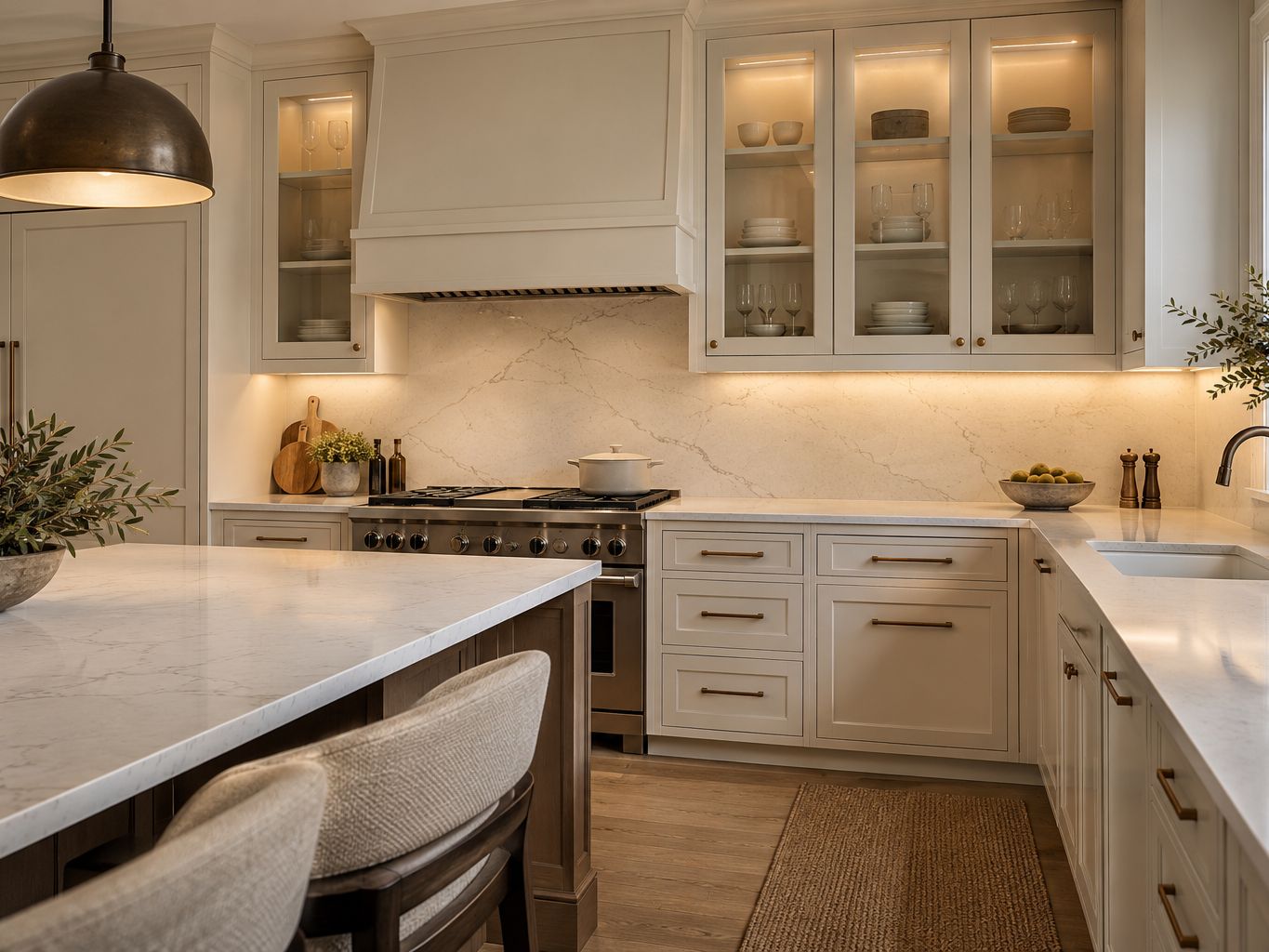
Cabinet LED lighting
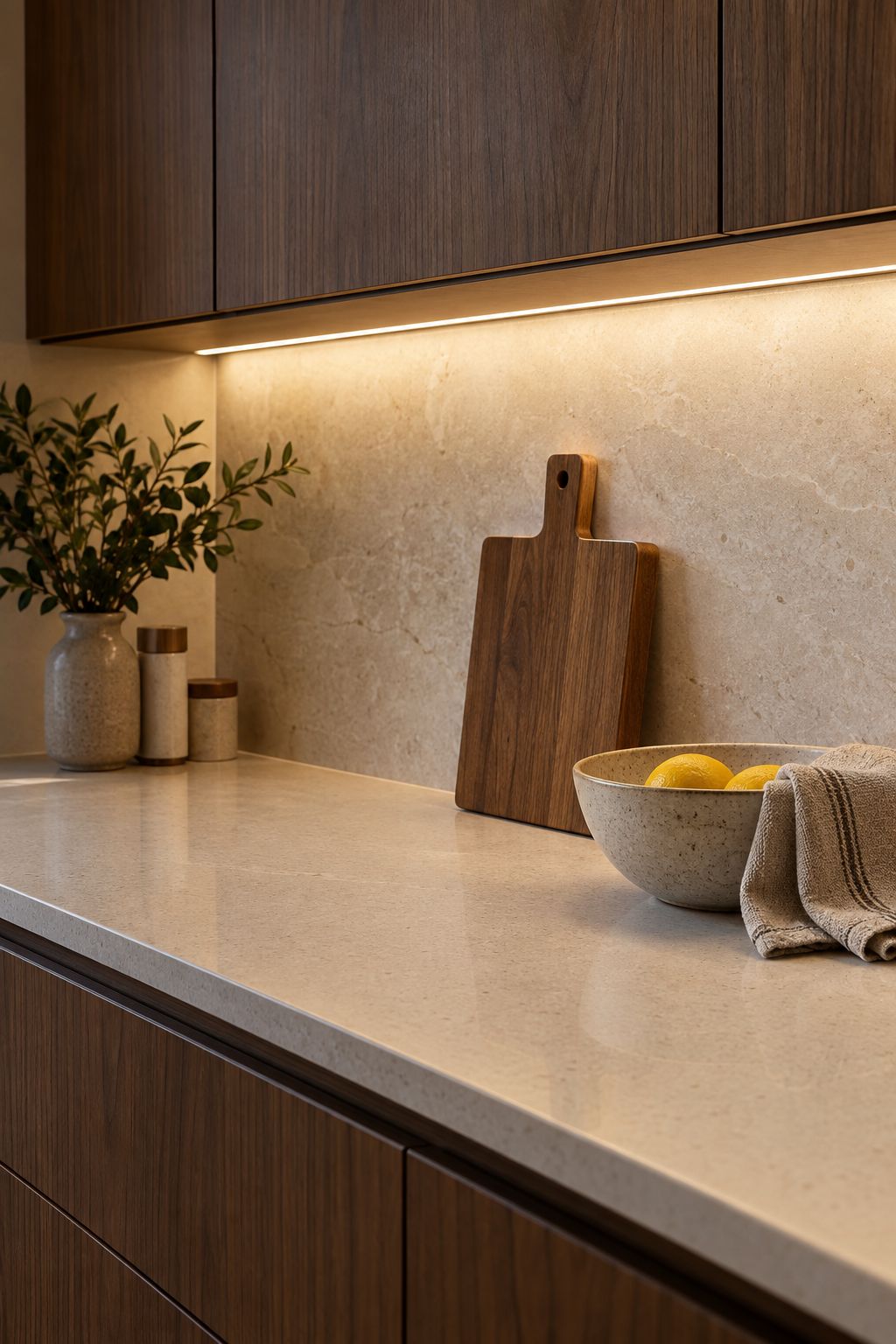
Clear task light. Quiet architectural detail.
Explore lighting02 / Light for the way you live
Light for preparing, gathering and slowing down. Architectural LEDs, cabinet lighting and outdoor scenes, designed around your home and the materials within it.
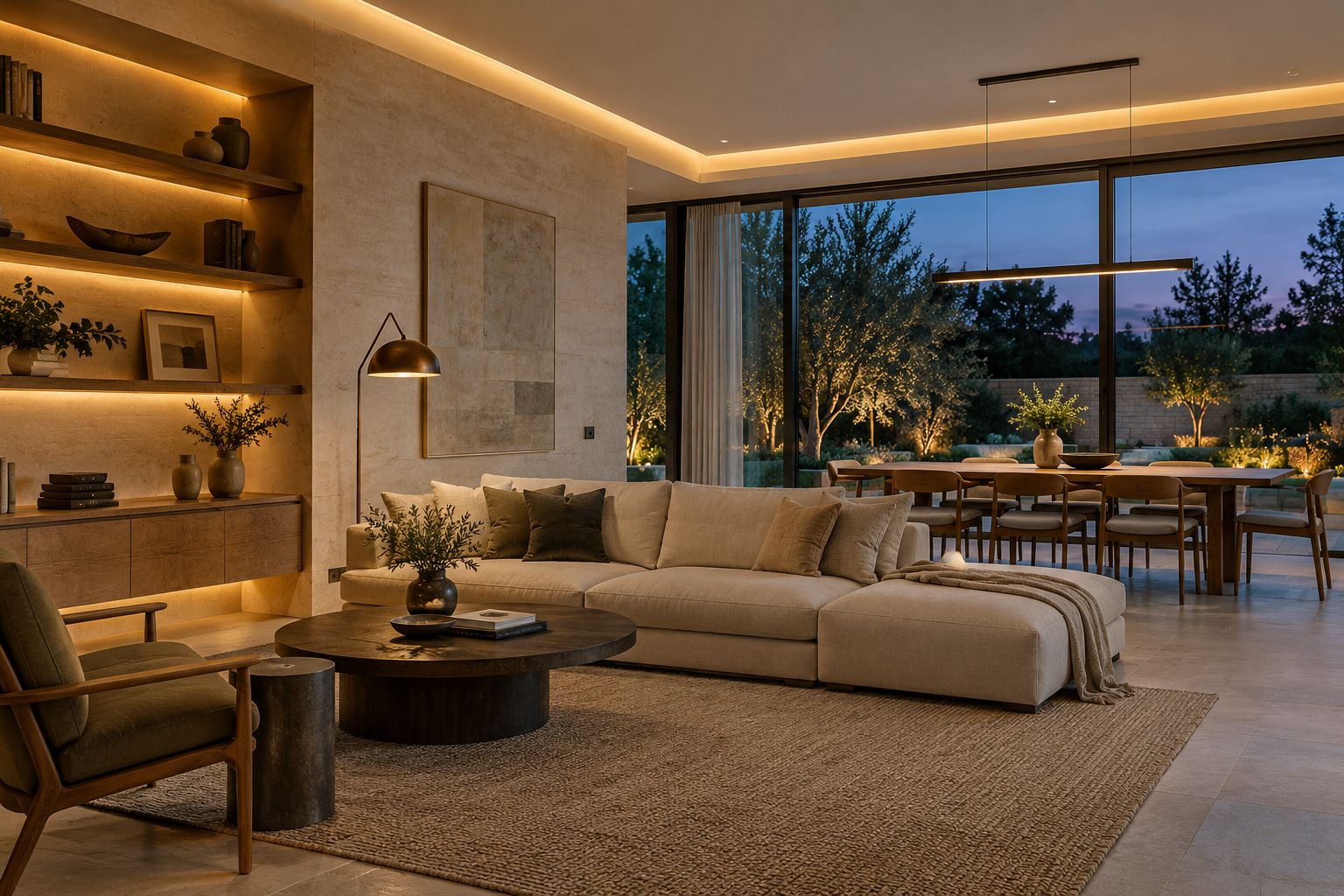
Ways to work with light
From practical cabinet lights to a garden after dark, explore the possibilities for your space.
Clear task light. Quiet architectural detail.
Explore lighting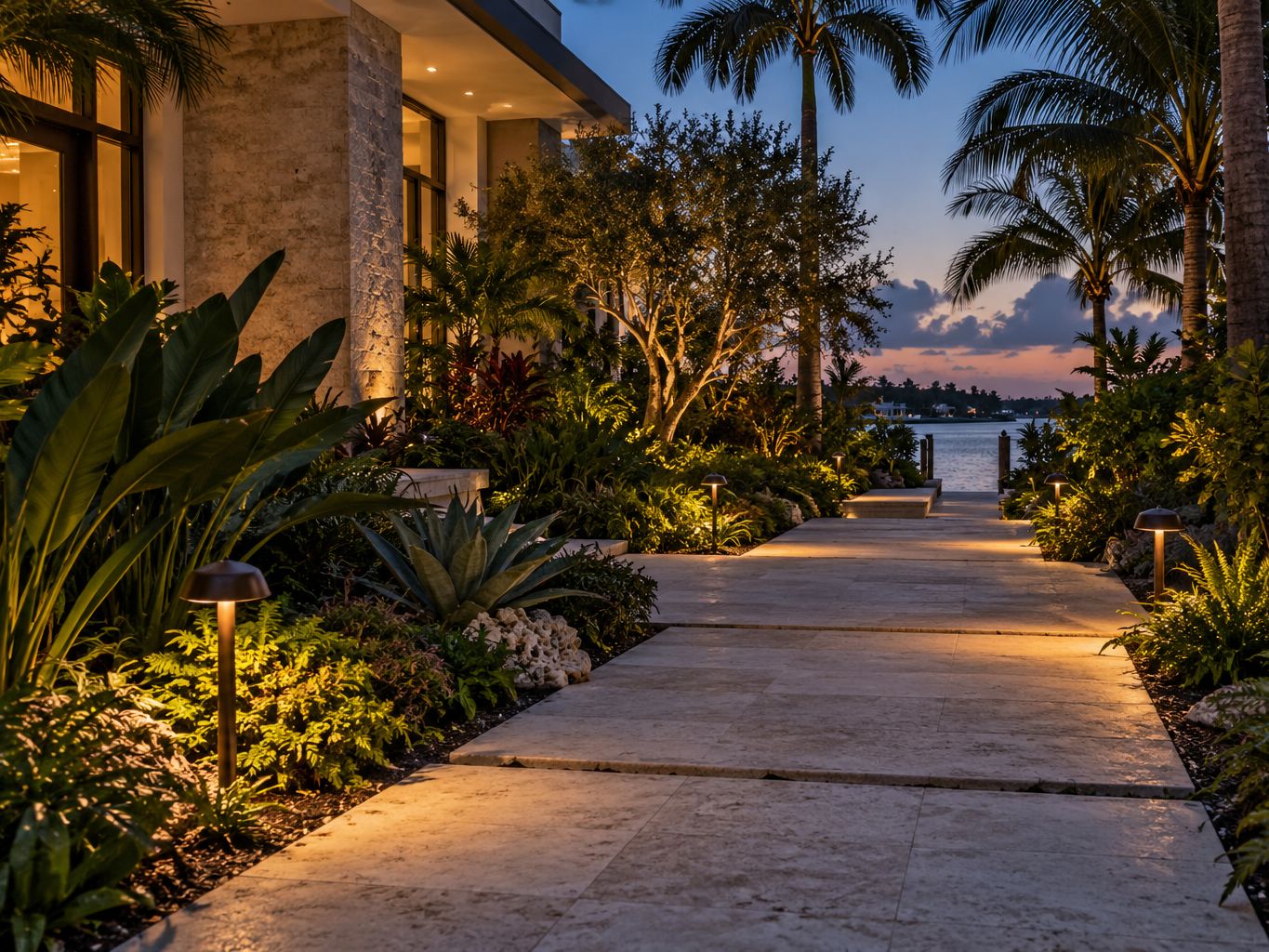
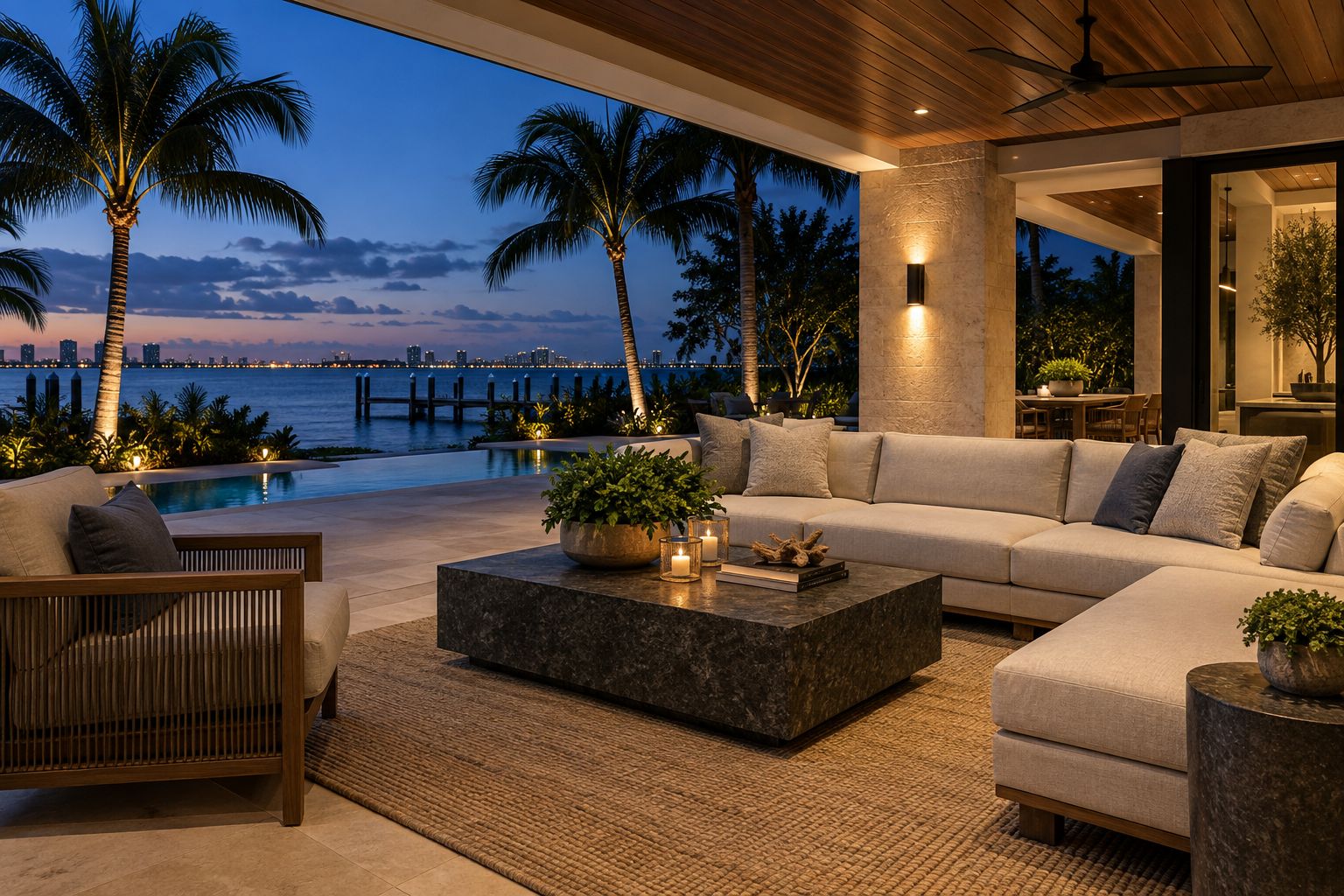
Scintillax designs and installs landscape, garden and pathway LED lighting across Southwest and Southeast Florida, with planting, paths, steps and lanais considered together.
Explore lighting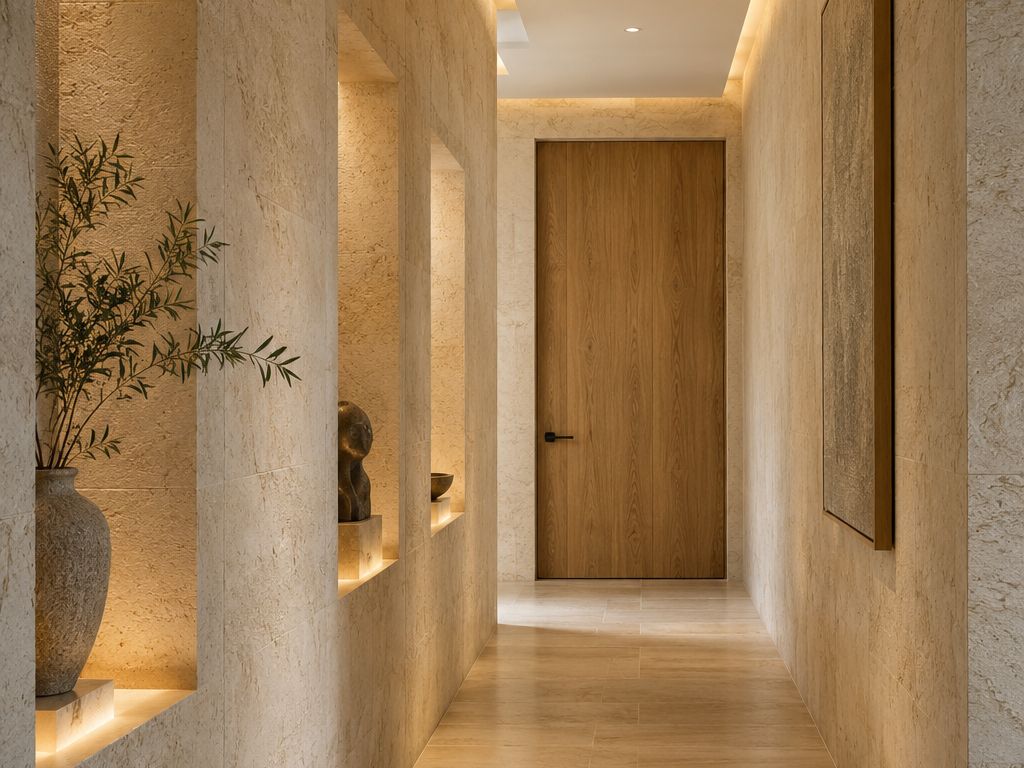
Let light reveal the details.
Explore lighting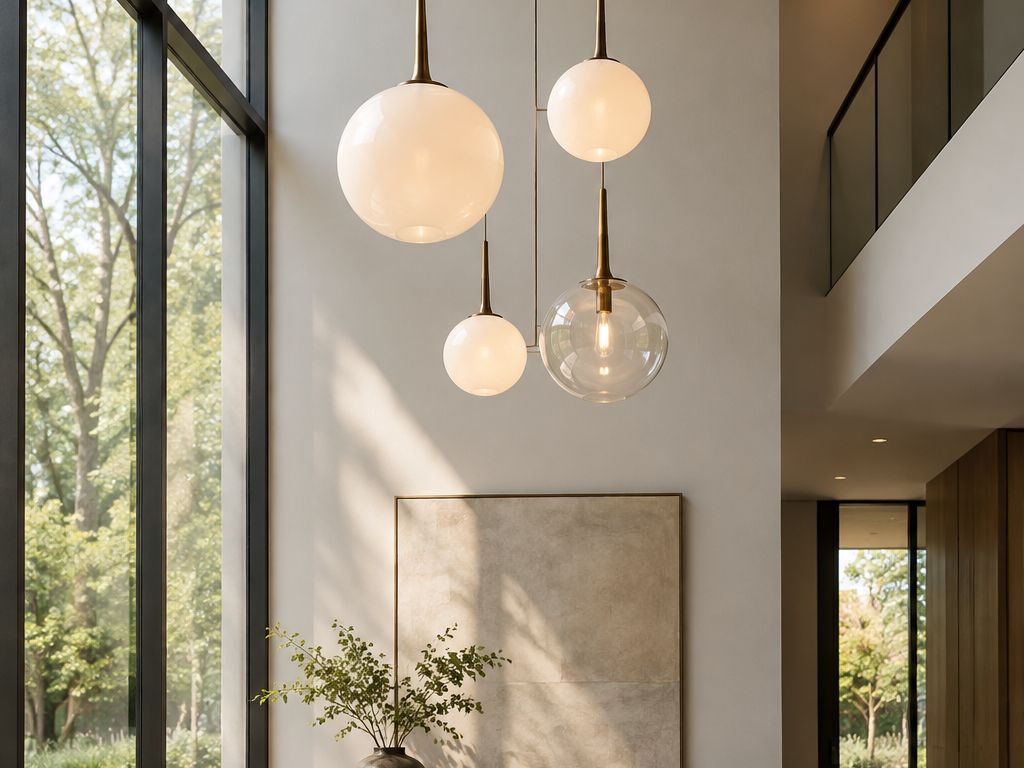
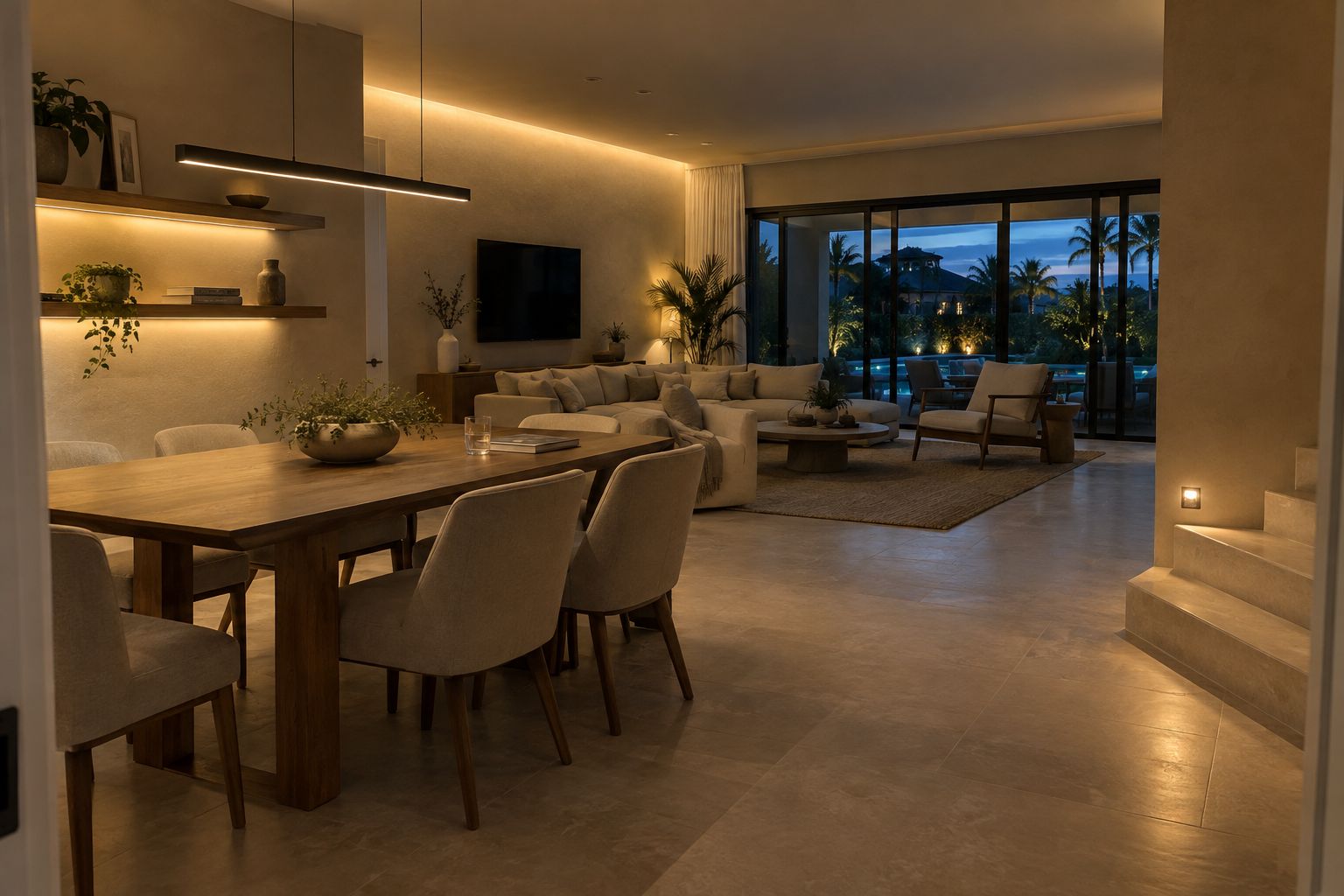
Linear LED lighting design and installation for Southwest and Southeast Florida interiors, including decorative pendants and integrated channels planned around the space.
Explore lighting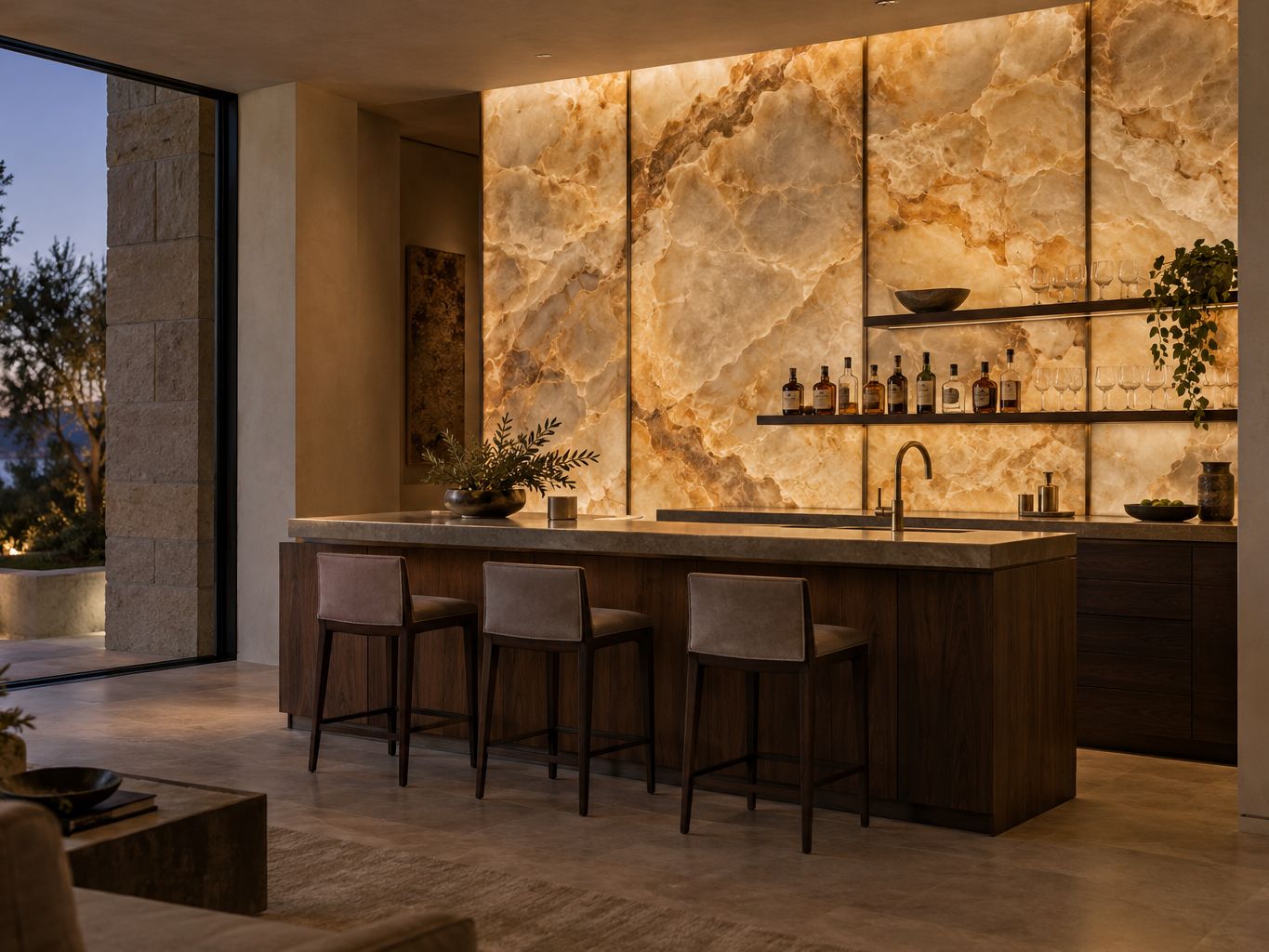
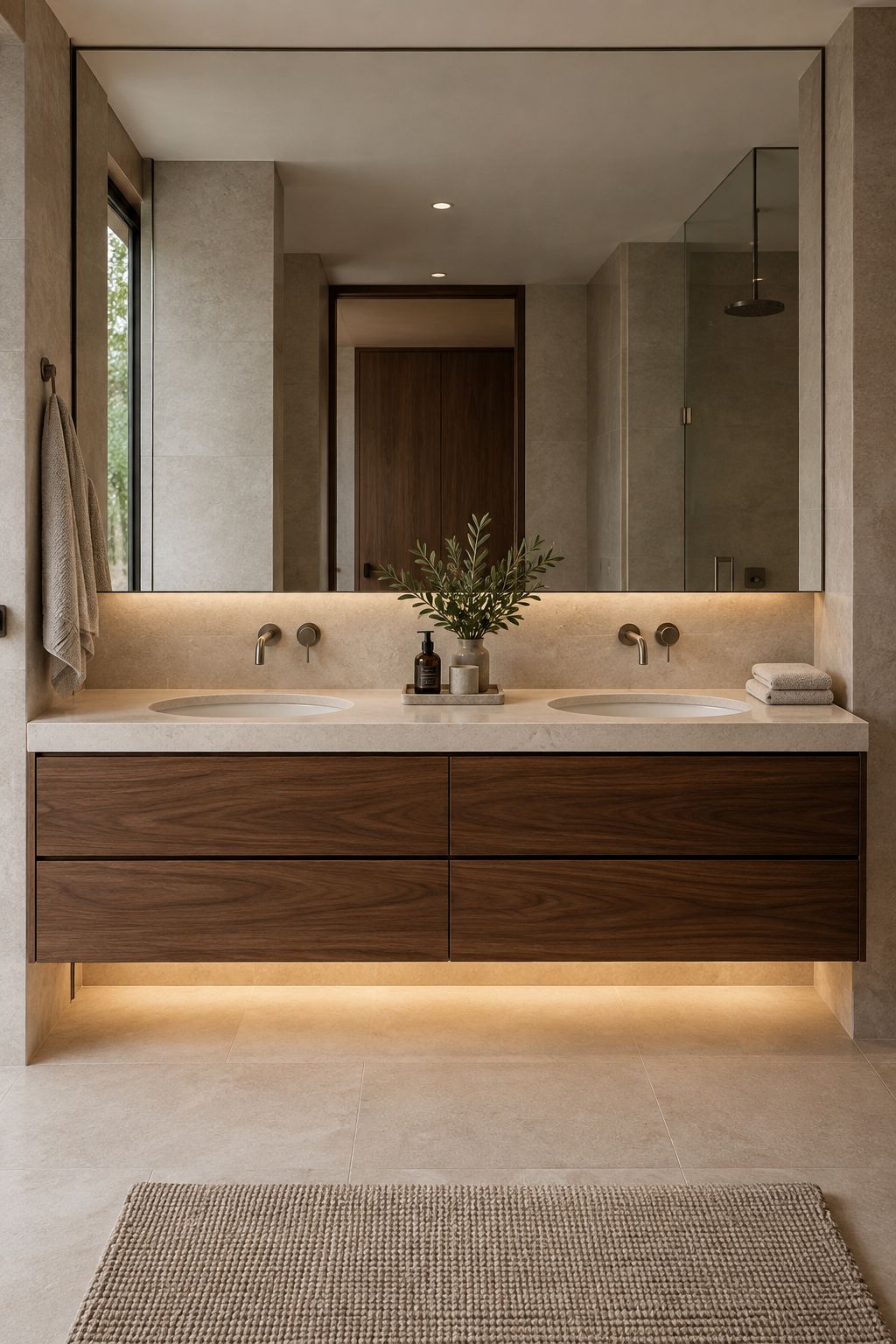
Backlit stone countertops, bars and feature walls in Southwest and Southeast Florida, designed around the actual slab’s translucency, support and lighting system.
Explore lighting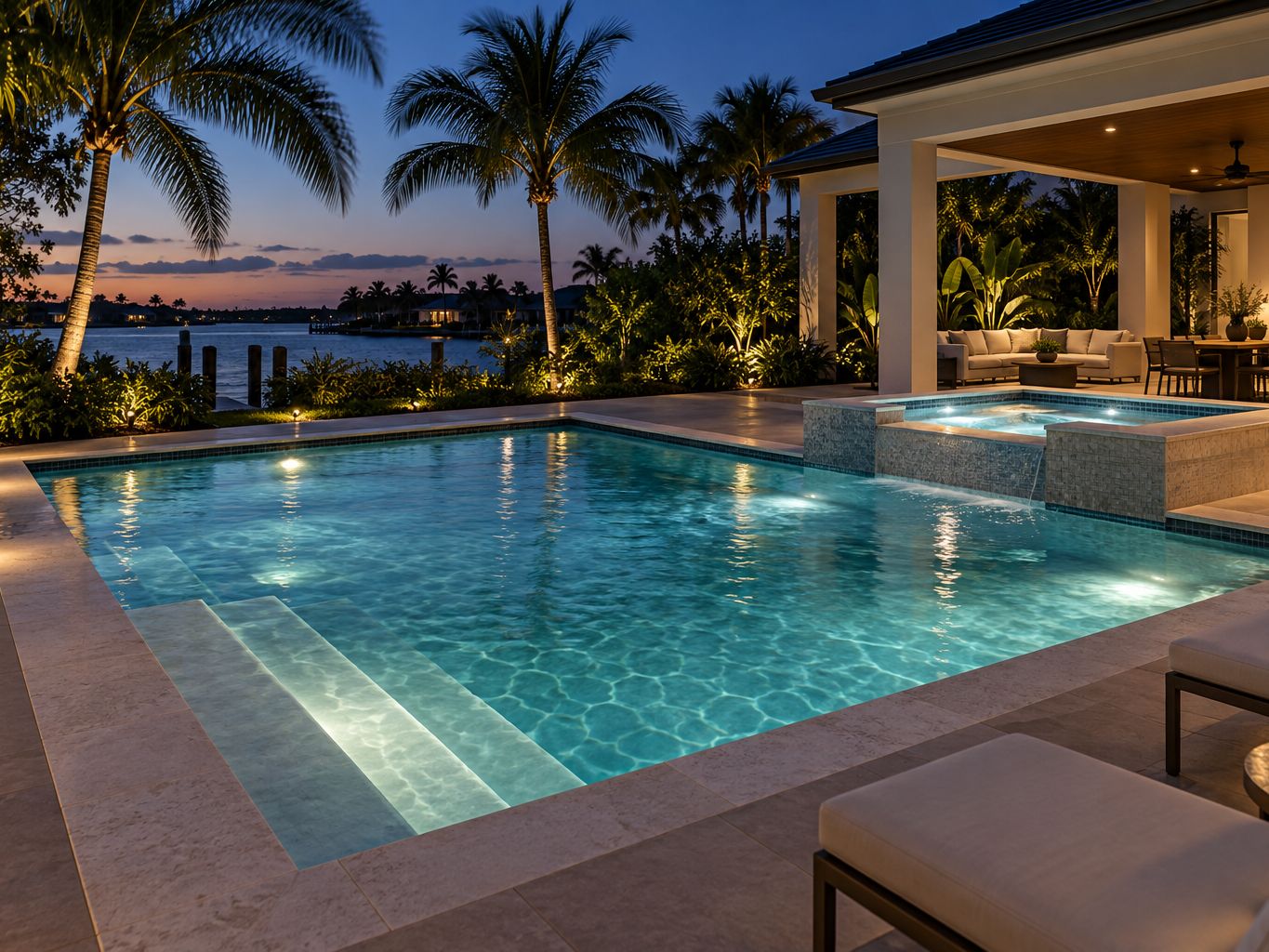
Consider the water and the evening around it.
Explore lighting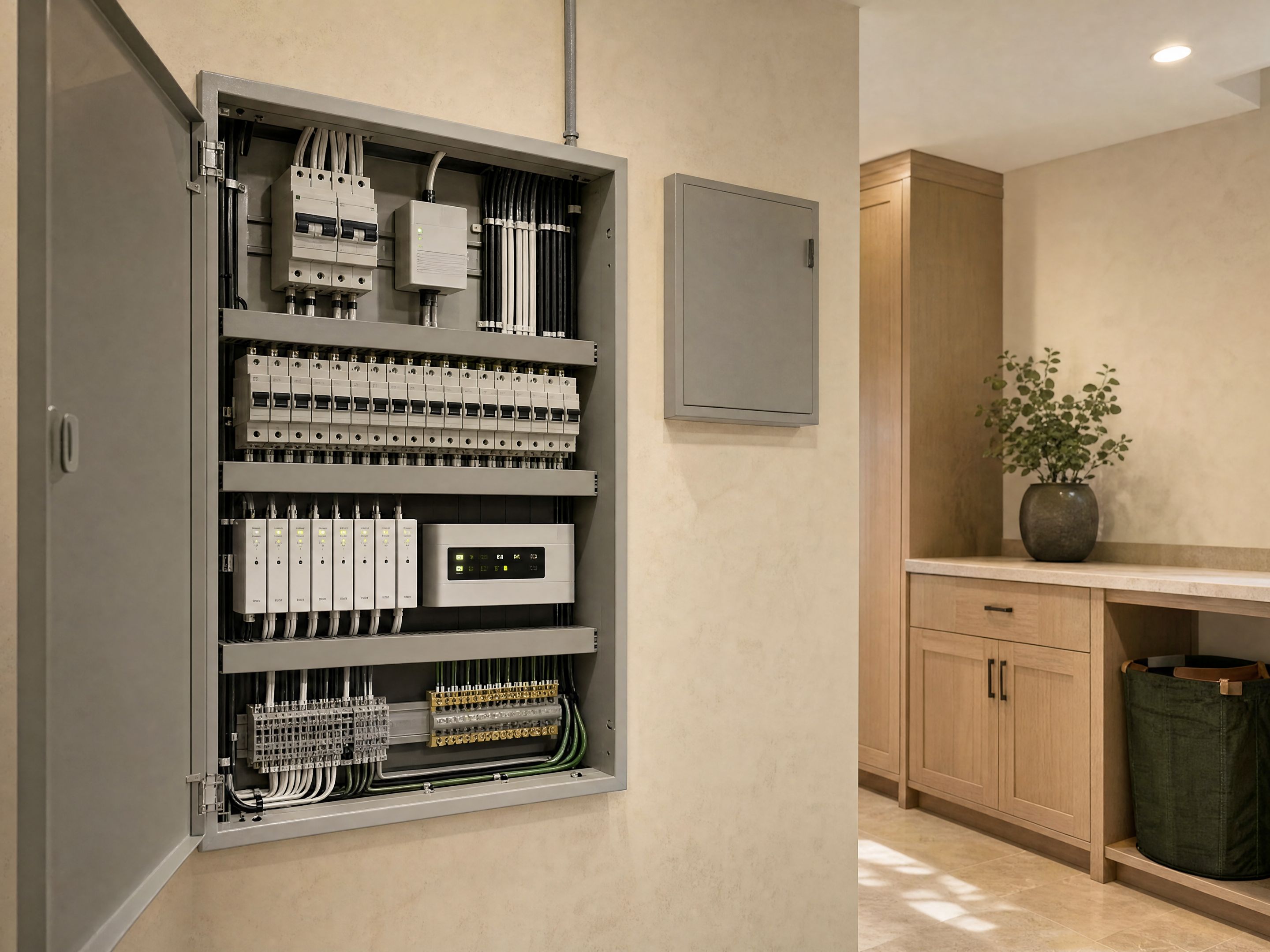
Whole-home lighting control, designed with the light itself. Scintillax designs and installs smart lighting control panels for Florida homes: every lighting circuit wired back to one enclosure, then controlled from engraved keypads, a phone app or a schedule.
Explore lightingThe most memorable lighting often reveals the room before it reveals the fixture: a clear preparation surface, the grain of a cabinet, a softly lit ceiling, a garden visible through glass. Scintillax designs and installs LED lighting across Southwest and Southeast Florida, from a focused cabinet upgrade to connected interior and outdoor layers.
Start with three roles. Ambient light supports the room as a whole. Task light serves cooking, reading, dressing or working. Accent light gives attention to a surface, object or architectural detail. The right balance helps a contemporary home feel composed while remaining useful every day.
Our custom cabinet service brings design, consultation and installation together with local CNC fabrication. Kitchens, closets, laundry rooms and garages can include precut LED insertion channels for the selected profile. Plan the diffuser, cable route and accessible driver in the cabinet drawing before fabrication.
For stone countertops, review the actual slab and backsplash with the intended cabinet light. A polished finish can reflect a visible strip; a textured wall can become more pronounced under grazing light. Mirrors and custom glass add another set of reflections. Seeing these details together helps the lighting support the materials you have chosen.
An existing kitchen may suit a surface-mounted profile with a discreet cable route. Open walls or new cabinetry allow other recessed details. Neither approach removes the need to reach connections and drivers later. We review mounting space, selected fixtures, control preferences and the construction sequence before confirming the scope.
Electrical connections, required licensed-trade coordination and any project-specific permissions are assigned before work begins. For a condominium, share building access rules and work arrangements. For a coastal property, identify exposed outdoor locations as well as sheltered rooms and lanais.
For a new home or a full renovation, the lighting can be wired to a smart lighting control panel instead of a dimmer behind every switch. Relay and dimming modules sit together in one ventilated enclosure, while engraved keypads, an app or a timeclock recall scenes across the kitchen, living areas, garden and pool. Plan the zones while the fixtures are selected, so each module suits the LED driver it will dim.
A glowing island side, bar or wall starts with a slab that actually transmits light. Some onyx and selected quartzite can be considered, but appearance in a photograph does not establish suitability. Review a physical sample with the proposed lighting, including backing, reinforcement, seams and possible support shadows.
The backlit stone service considers the complete assembly: stone, diffusion, source spacing, structural support, heat management, controls and service access. The surface should work with the lights off as well as on.
Share your city or ZIP code, wide room photographs, approximate dimensions and close views of the proposed mounting areas. Include selected finishes, any existing fixture or control references, and what feels missing today: useful worktop light, comfortable evening brightness, a clearer path or a feature you would like to reveal.
Tell us which lights should operate together and which need their own control. We can use that brief to discuss a realistic scope, installation sequence and proposal. For more detail, read planning LED lighting for your space and layered LED lighting design.
Architectural glass · Marble · Onyx · Quartzite
Explore all our service areas or share your project location when requesting a consultation.
Why modern LED lighting
A considered lighting plan makes a modern home easier to use and gives its materials a different presence after dark.
01
Place task light at the worktop, wardrobe or reading chair. Concealed profiles and carefully aimed fixtures can make daily routines clearer while keeping the architecture quiet.
02
Separate preparation, dining, display and outdoor zones. Compatible dimming and scene controls let the room move from practical work to a softer gathering without changing fixtures.
03
LEDs can deliver the same light output with substantially less electricity than incandescent sources. Compare lumens and watts; the actual savings depend on the products, operating hours and controls.
For scale, the FTC compares an approximately 800-lumen incandescent bulb using 60 watts with an LED using about 9 watts. This is a bulb example, not a promised saving for a whole installation. Read the FTC comparison.
Light throughout the home
One room or a complete home: connect practical task light, a comfortable ambient layer and the details you want to reveal.
Choose the complete system
The fixture, the surface and the controls belong in the same conversation. Review these details before finishes are closed.
Brightness
Lumens describe light output; watts describe power use. The beam, mounting height and room finishes determine where that light lands. Specify the task before choosing the output.
White-light appearance
Compare 2700K and 3000K as warm interior starting points, and a whiter option if the task calls for it. These are sample choices, not fixed room rules. Review them beside the actual stone, wood and paint.
Color quality
Color temperature does not describe how faithfully a source renders material colors. Ask for color-rendering information and compare real samples, especially for wood, clothing, art and richly veined stone.
Glare & diffusion
Review the room seated, standing and from nearby doorways. A diffuser, recessed profile or different aiming angle can soften a visible source, but polished stone and glass still need a reflection check.
Dimming & smart controls
The LED, driver and control must work together. Test low-level dimming, startup and scene recall. Dim-to-warm changes warmth as brightness falls; tunable white allows separate adjustment within the selected system’s range.
Service access & exposure
Reserve access to drivers and connections, follow product ventilation requirements and confirm replacement options. For outdoor work, review moisture, direct rain, irrigation and coastal exposure at each location.
These references explain general lighting principles. Product suitability and the installation specification are reviewed for your project.
A day in the home
These are starting points for a controls conversation. The available settings depend on the selected products and wiring.
Worktop and sink task lights on; island and room lighting balanced for cooking and cleanup.
Dining and decorative light lead; cabinet and architectural layers sit at a lower level.
Reading light stays useful while overhead and display layers soften. Avoid bright reflections near seating.
Entry and pathway zones support the route; timers or sensors limit lighting to when it is useful.
Enjoy the result
Discuss a final walkthrough with your installer: review glare from normal seating positions, try the everyday scenes, identify accessible service points and keep the fixture and control references. Confirm care instructions and how to raise a question after installation in the agreed scope.
Find lighting planning details for your location, then share the room or outdoor area you want to change. Scintillax designs and installs cabinet, architectural, landscape and pathway LED lighting, with pool systems and backlit stone reviewed for their particular requirements.
From Punta Gorda to Marco Island, explore installation planning for your community.
Our Miami-based staff serve Miami and surrounding areas. Across our service area, access, scope and installation arrangements are reviewed for each property.
Miami · Hialeah · Miami Gardens · Homestead · Doral · Miami Beach · North Miami.
Fort Lauderdale · Pembroke Pines · Hollywood · Miramar · Coral Springs · Pompano Beach · Davie · Plantation · Sunrise · Deerfield Beach · Lauderhill · Tamarac · Weston.
West Palm Beach · Boca Raton · Boynton Beach · Delray Beach · Palm Beach Gardens · Wellington · Jupiter.
Port St. Lucie · Fort Pierce.
For a Miami project, explore Miami LED lighting installation and Miami under-cabinet lighting.
A gallery of possibilities
Explore the shapes, materials and details. Select an image for a closer look.
Bring the ideas you enjoy to a conversation about your own space.
Before you begin
Start with these planning details, then discuss the requirements of your own space.
LED systems can combine useful task light with discreet architectural accents and separately controlled evening settings. They can use less electricity than incandescent sources for comparable light output. The result depends on placement, glare control, product quality and a compatible dimmer or control system.
Scintillax plans linear and accent lighting, cabinet and shelf lighting, garden and pathway lights, stair details, backlit stone, and pool and spa lighting. Each application is reviewed for its location, desired effect, controls and installation requirements.
There is no universal color temperature for a home. Compare warm options such as 2700K and 3000K alongside your stone, cabinetry and paint, and consider the task and adjoining rooms. Color temperature, color rendering and brightness describe different qualities; review a working sample before selecting the complete system.
Yes, compatible fixtures and controls can be planned in zones for preparation, dining, display and circulation. Discuss which groups should dim together, where controls belong and whether you want simple wall dimmers, sensors or scene controls. Existing wiring and the selected LED and driver combination determine the available options.
Compatibility needs to be checked. Share fixture labels, dimmer details and photographs of the existing installation. We review the proposed LED products, drivers, controls and wiring conditions before confirming what can be retained.
Yes. A smart lighting control panel gathers the switching and dimming modules for each zone into one enclosure, so keypads, an app and schedules can control interior, landscape and pool lighting together. In a finished home, wireless dimmers on the same platform can cover rooms that cannot be rewired.
Plan it before cabinetry, ceilings, stone or exterior surfaces are closed in. That allows room for channels, mounting, cable routes and accessible drivers. Required electrical connections and trade responsibilities are confirmed for the specific project.
Bring photographs, your project location and the details you would like to discuss.
Discuss your projectBuild your material palette
Light changes how a finish feels. Explore stone and glass examples to review alongside the proposed fixtures.


Availability and suitability are confirmed for your project. Current physical samples and the required specification guide the final choice.
Illustrated design studies
Explore proposed materials, details and scope, then adapt the ideas to your actual project.
Fort Myers · Design study
An illustrated Fort Myers lighting study combining a linear pendant, concealed shelf lighting, a ceiling cove and stair accents. Explore the proposed LED design.
Explore the studyThe lighting journal
Explore the benefits, compare the details and plan each room around daily life.
Light & atmosphere
See how well-planned LED lighting improves task visibility, atmosphere, material detail and everyday control in a modern Florida home.
4 min read
Read the storyLighting decisions
Compare warm white, dim-to-warm and tunable lighting, then review glare, color rendering and dimming with your actual stone and cabinet finishes.
4 min read
Read the story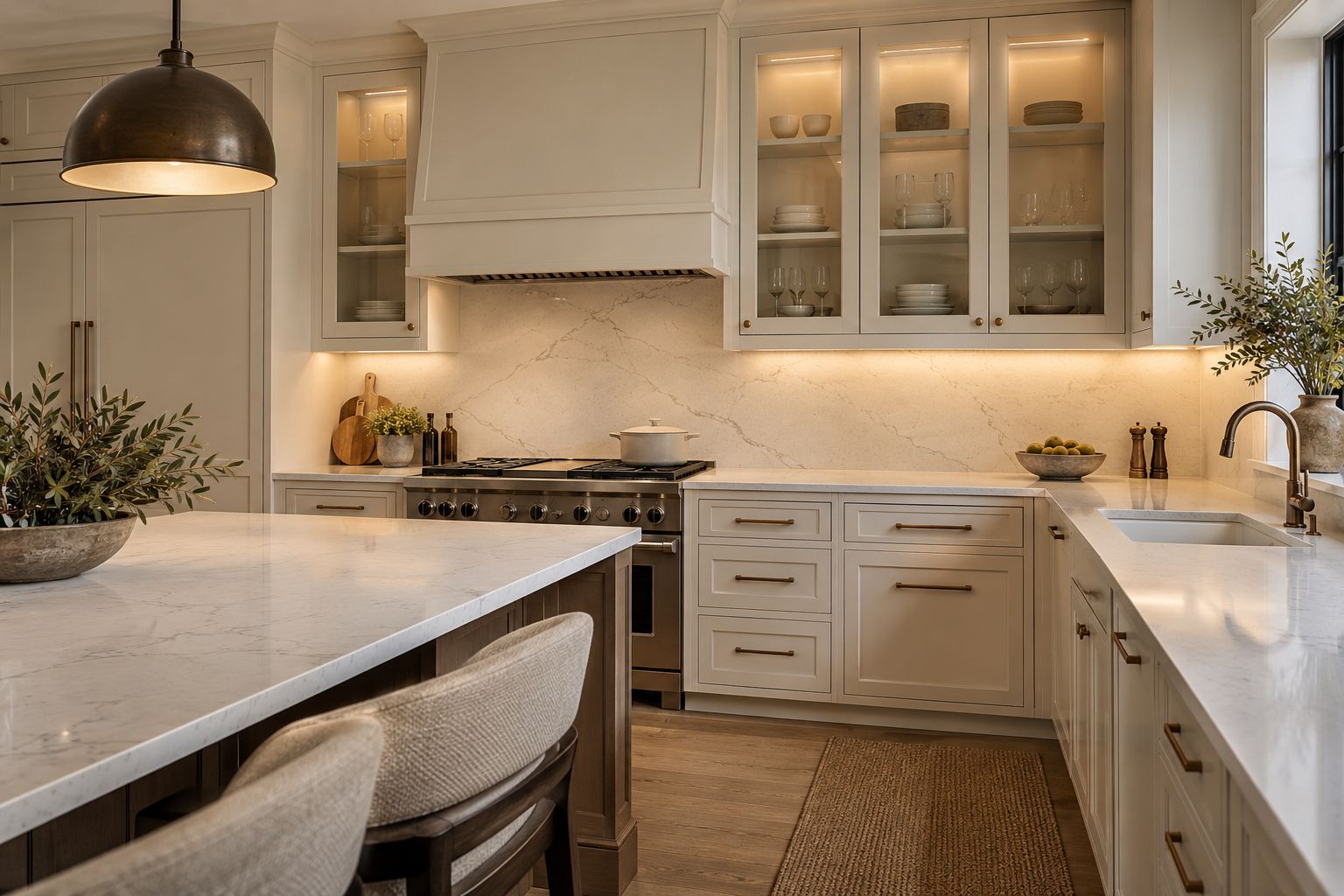
Light & atmosphere
Plan LED lighting for kitchens, living rooms, bedrooms, bathrooms, closets, stairs, home offices, garages, lanais, gardens and pools.
5 min read
Read the story