Choosing architectural glass
Scintillax plans shower enclosures, custom mirrors, interior partitions and glass display enclosures across Southwest and Southeast Florida. Clear, textured and mirrored surfaces each change how a room feels. Start with the view you want to retain, the privacy you need and the space available for doors and cleaning.
Compare clear and low-iron glass beside your finishes.
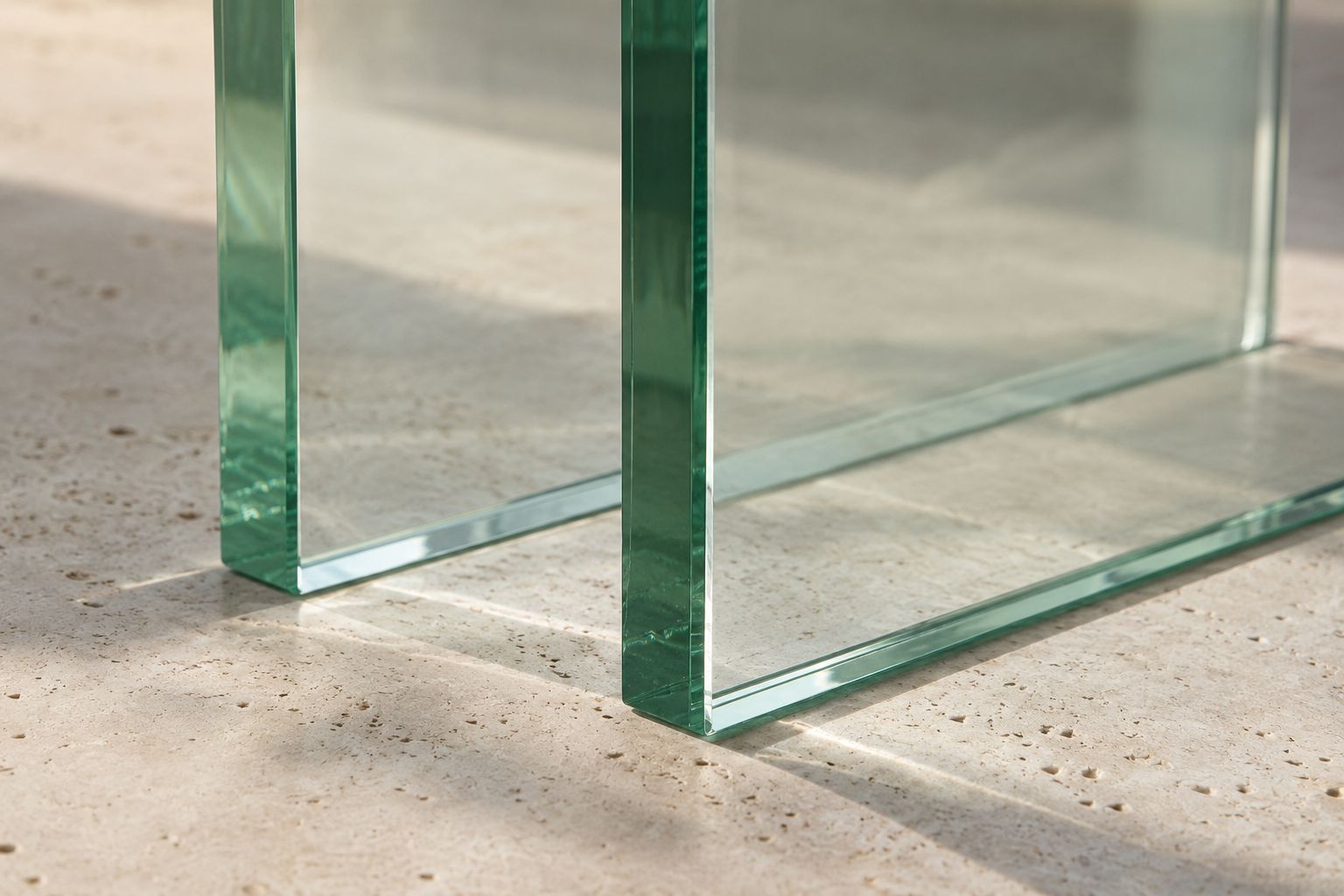
Standard clear glass can show a green tint, particularly at its edges. A low-iron option reduces that tint and can make a difference beside pale stone or white tile. Guardian’s UltraClear product guidance describes the clarity of its low-iron glass. Compare samples at the proposed thickness in your room; low-iron describes optical appearance, while safety glazing, thickness, supports and hardware remain separate specification decisions.
Choose privacy from the actual sight line.
Textured or satin glass can soften the view, but its privacy depends on the pattern, distance and lighting on both sides. Review a large enough sample to see the repeat, and consider the silhouette of someone standing close to it. For an interior glass partition, decide which sight lines matter from the doorway, hall and seating area. A photograph alone cannot establish the privacy you will experience.
Plan the shower opening as a whole.
Confirm finished tile and stone dimensions, the door swing or sliding arrangement, adjacent fixtures, threshold details and the position of shower outlets. Mark where hardware will attach and who confirms the supporting construction. The glazing team specifies the glass and fittings for the actual opening and use. Review water-control expectations as well as appearance, especially for an open walk-in layout. Compare shower-glass options before settling on the arrangement.
Give mirrors and lighting a shared plan.
A mirror reflects the light sources opposite it as well as the person standing in front of it. Review fixture positions at standing and seated eye levels, and coordinate mirror dimensions with the vanity, backsplash and outlets. For an illuminated mirror or floating vanity, plan wiring and access before the finishes are installed. Modern lighting should help the daily task while preserving a comfortable evening setting.
Understand what a protective coating changes.
Some shower glass includes a factory-applied protective surface, such as Guardian ShowerGuard. Ask which coating is included, which side faces the shower and which care instructions apply. A coating is a product choice, not a reason to omit routine cleaning. Use a method compatible with the glass, coating, metalwork and neighboring stone; a cleaner suitable for one surface may be unsuitable for another.
Confirm the details before fabrication.
Bring room photographs, approximate opening dimensions and references for the stone, tile and hardware finish. Discuss glass type, edges, handles, hinges, support, access and the order of installation. A wine-display enclosure also needs a separate conversation about the intended environment and any cooling requirements; decorative glazing alone does not establish climate control. Plan your glass project with Scintillax once the surrounding finishes and intended use are clear.