Choosing marble
Scintillax designs and installs marble vanity tops, selected kitchen countertops and coordinated stone details across Southwest and Southeast Florida. Marble’s veining and reflections give it a distinct presence. Its appearance, intended use and care expectations should belong to the same selection conversation.
Begin with the way the surface will be used.
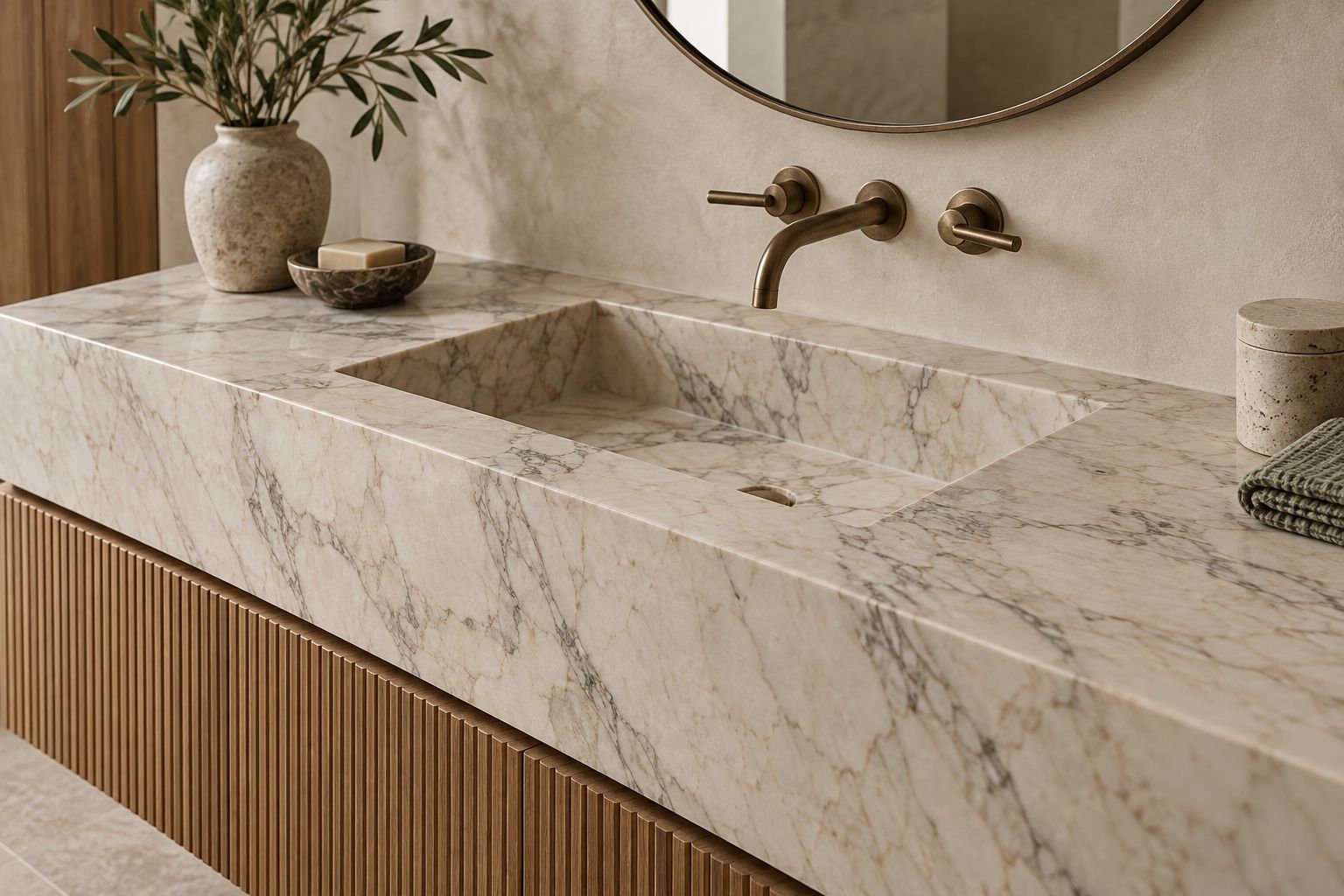
A primary vanity, guest bathroom and working kitchen place different demands on the surface. Describe your cleaning routine and where everyday products or cookware will sit. Review a sample with the particular use in mind before confirming the stone. Compare marble bathroom surfaces with the cabinet, basin, fixtures and adjoining finishes rather than choosing the top in isolation.
Compare honed and polished finishes in the room.
Ask which finishes can be supplied for the actual slab. Compare their appearance under daylight, mirror lighting and the planned evening setting. Reflections can influence how veining reads beside glass and bronze or chrome fittings. The finish choice should suit the surface you want to live with as well as the first impression of the room.
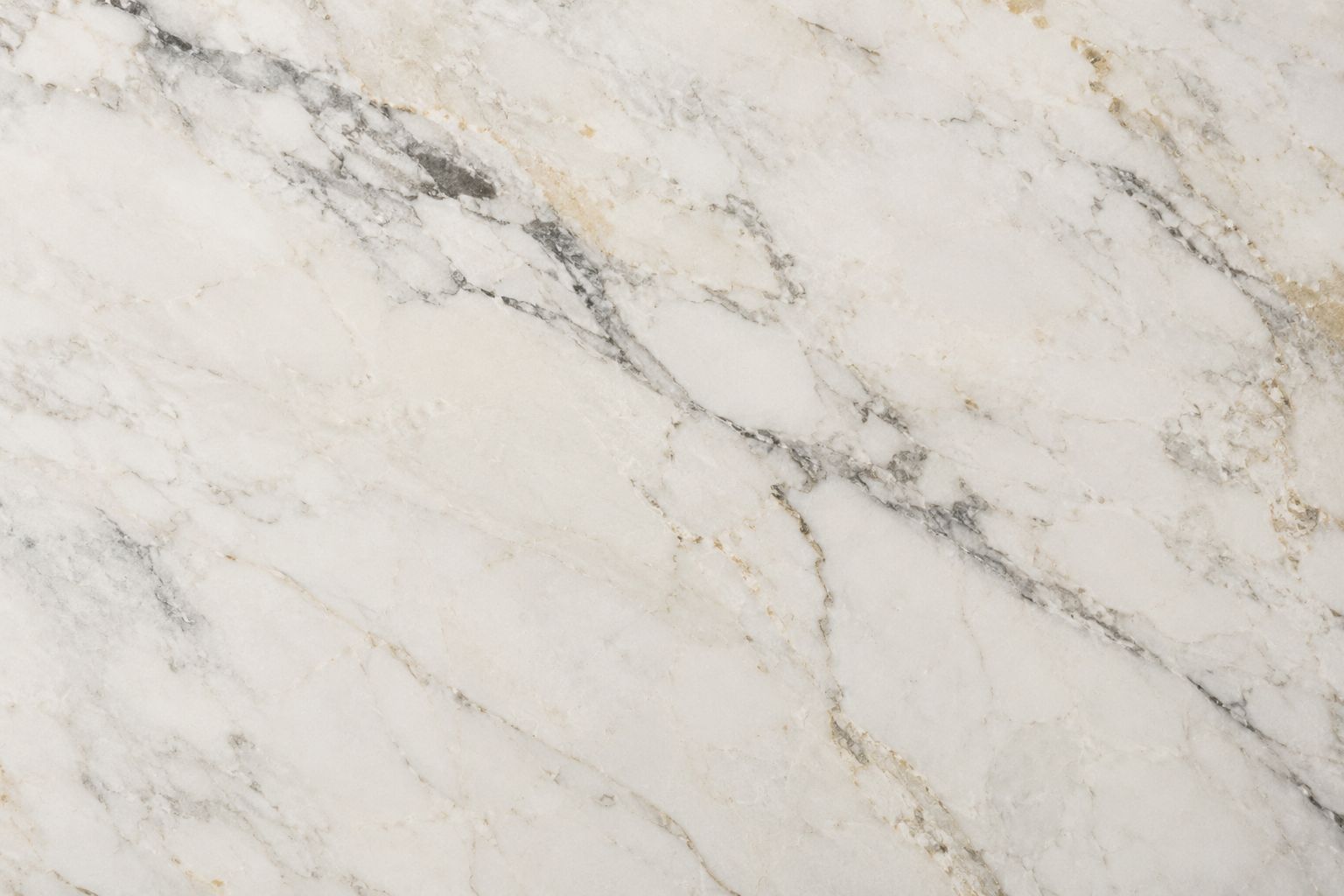
Plan the veining before the pieces are cut.
Look at the full slab and the proposed piece layout. Review the edge profile, visible seams, basin openings and any backsplash or vertical return. A substantial edge changes the visual weight of a vanity, while a waterfall end adds another face to coordinate. Slab dimensions, supports and cutouts influence which compositions are practical.
Coordinate stone, mirrors and shower glass.
Bring current basin and fixture references alongside the cabinet drawings. Custom mirrors need a relationship to the vanity and lights; shower glass is measured against the finished opening. Discuss the order of these installations with the wider project team so the stone, glass and plumbing interfaces are resolved together.
Understand the care tradeoff.
The Natural Stone Institute explains that acidic products can etch calcium-based stones such as marble. Use suitable non-acidic care products and discuss sealing for the selected slab. Sealing does not prevent acid etching.
Etching changes the surface itself; staining involves a substance entering the stone. Lemon juice or an acidic bathroom cleaner can leave a dull mark even when the stone has been sealed. The Institute’s marble care guide notes that etching can be less conspicuous on honed or textured finishes than on polished marble. Honing changes how marks read; it does not make marble acid-resistant. Discuss whether you welcome a developing patina or prefer a surface that asks less of your daily routine.
Choose the application around that tradeoff.
Marble can be compelling for a vanity, backsplash or focal surface where its pattern matters most. A frequently used cooking counter deserves a deliberate conversation about spills, cleaning and future refinishing. For exterior details, review the particular stone, finish, anchoring and exposure separately. If you prefer a natural kitchen surface with greater resistance to everyday food acids, compare a verified quartzite sample before deciding.
Bring a complete brief to the consultation.
Share room photographs, approximate dimensions, the cabinet plan and the finishes you intend to keep. The proposal defines final measurements, fabrication, seams, cutouts, support, access and installation responsibilities. Removal, plumbing and electrical coordination are reviewed as part of the actual scope. Product suitability and availability follow the particular selection.
View the illustrated marble vanity inspiration for a proposed design direction, then discuss marble surfaces for your own Southwest and Southeast Florida property.