Choosing onyx
Scintillax plans onyx countertops, bar details and feature walls alongside architectural LED lighting in Southwest and Southeast Florida. Onyx can reveal mineral bands and depth when illuminated. The actual slab and its supporting assembly determine whether that effect is suitable for your project.
Select the stone with the light operating.
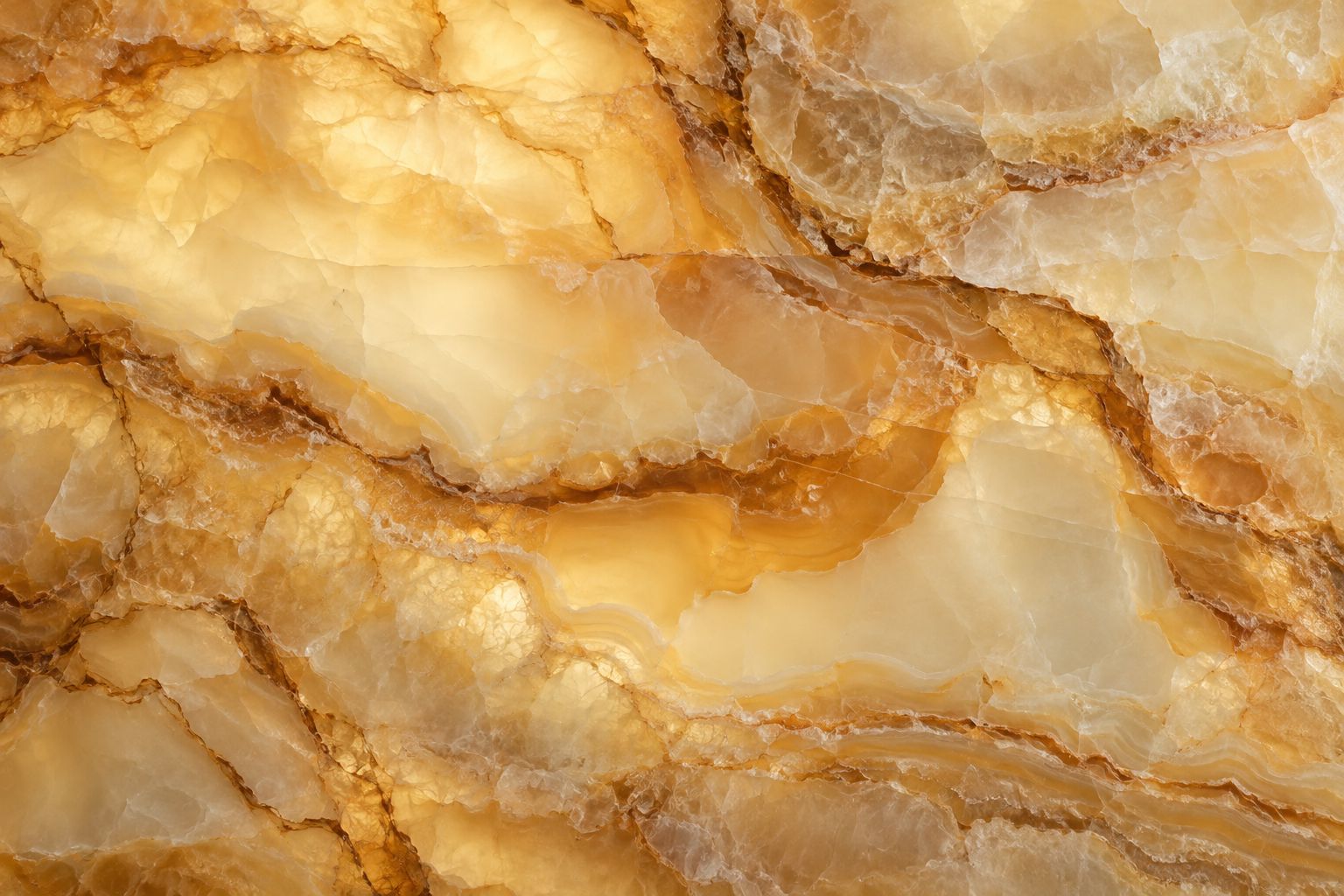
Review a physical sample with and without illumination at the proposed thickness. Use the intended backing and light source so inclusions, joints and visible light distribution can be discussed together. The example references below describe possible palettes; a stone name or photograph does not establish how your selected slab will transmit light.
Decide which faces should be illuminated.
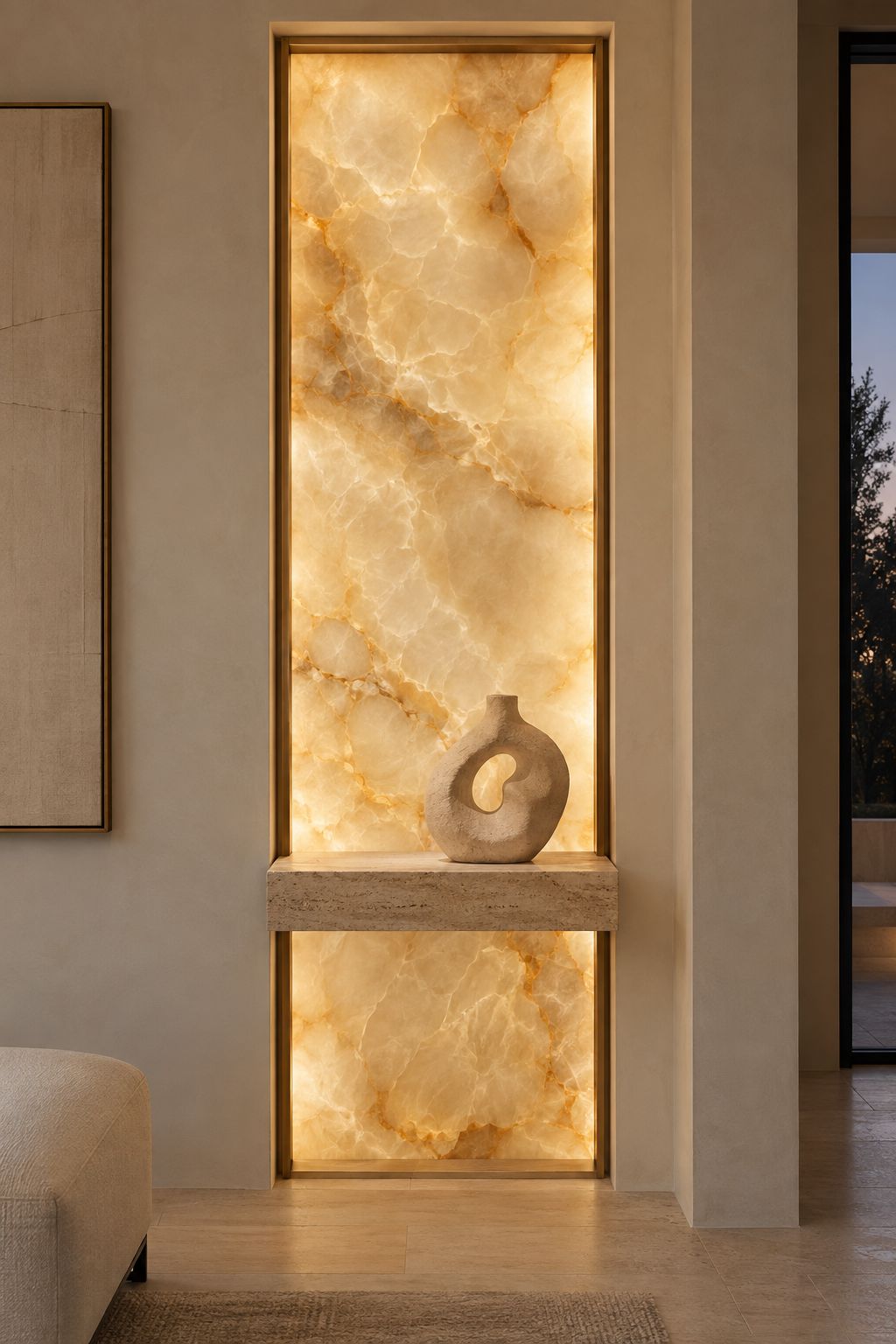
A bar front, counter, island end and wall can need different arrangements. Mark the intended illuminated faces on the drawing, including openings and adjoining finishes. Review how the pieces meet, where light may remain visible at an edge and how the feature sits beside other room lighting. The backlit-stone planning guide explains what to bring to that assembly review.
Coordinate the supporting construction.
Discuss backing, supports, edges and seam locations before the stone is fabricated. Concealed light needs a planned location for drivers, wiring and maintenance access. Controls, diffusion and product requirements form part of the lighting specification. Stone, cabinet and electrical responsibilities are established for the actual project before finishes are closed in.
Choose the setting around everyday use.
Describe what will sit on the surface and how often it will be touched or cleaned. A statement wall and a frequently used working counter ask different questions. Review the proposed finish and protection with the supplier, and compare the stone with the adjacent cabinetry, glass and hardware. This guide focuses on protected interior features; outdoor applications require their own product and exposure assessment.
Keep care specific to the selected onyx.
Use stone-specific care instructions. The Natural Stone Institute explains why calcium-based stones need non-acidic cleaners and a considered sealing plan. Discuss the actual stone, finish and use with the supplier before selecting a routine.
Architectural onyx commonly belongs to the acid-sensitive group of decorative stones. The Institute’s stone-selection guide includes onyx among materials that can etch when exposed to everyday acids; sealing does not prevent that surface change. A protected bar front or wall can therefore be a more comfortable choice than the main food-preparation counter. Review the likely contact with citrus, wine, toiletries and cleaning products before choosing where the stone should be touched or worked on.
Judge the effect during the day and evening.
Backlighting can reveal a different color balance from the unlit slab. Compare a dimmed evening setting as well as full output, and view the sample beside the surrounding cabinetry and room lighting. Ask how seams, fixings, backing and natural dark bands appear through the stone. Keep the driver reachable for future service and agree how light components can be replaced without unnecessary disturbance to the finished feature.
Bring stone and LED requirements into one proposal.
Share photographs, a simple room plan and the approximate size of the feature. Include a lighting sample or reference, which faces should glow, existing controls and the access available behind or beneath the assembly. The proposal defines the selected material, fabrication, supporting construction, light distribution and installation interfaces. Pricing and scheduling follow that review.
Explore the illustrated onyx-and-light inspiration, then discuss a backlit onyx feature with Scintillax. The backlit countertop service connects the stone choice with the installation conversation.