Light & atmosphere / Scintillax journal
Planning LED lighting that belongs in your space.
Compare LED lighting for new cabinets, existing cabinetry and translucent stone. Plan placement, controls and access for your Southwest or Southeast Florida space.
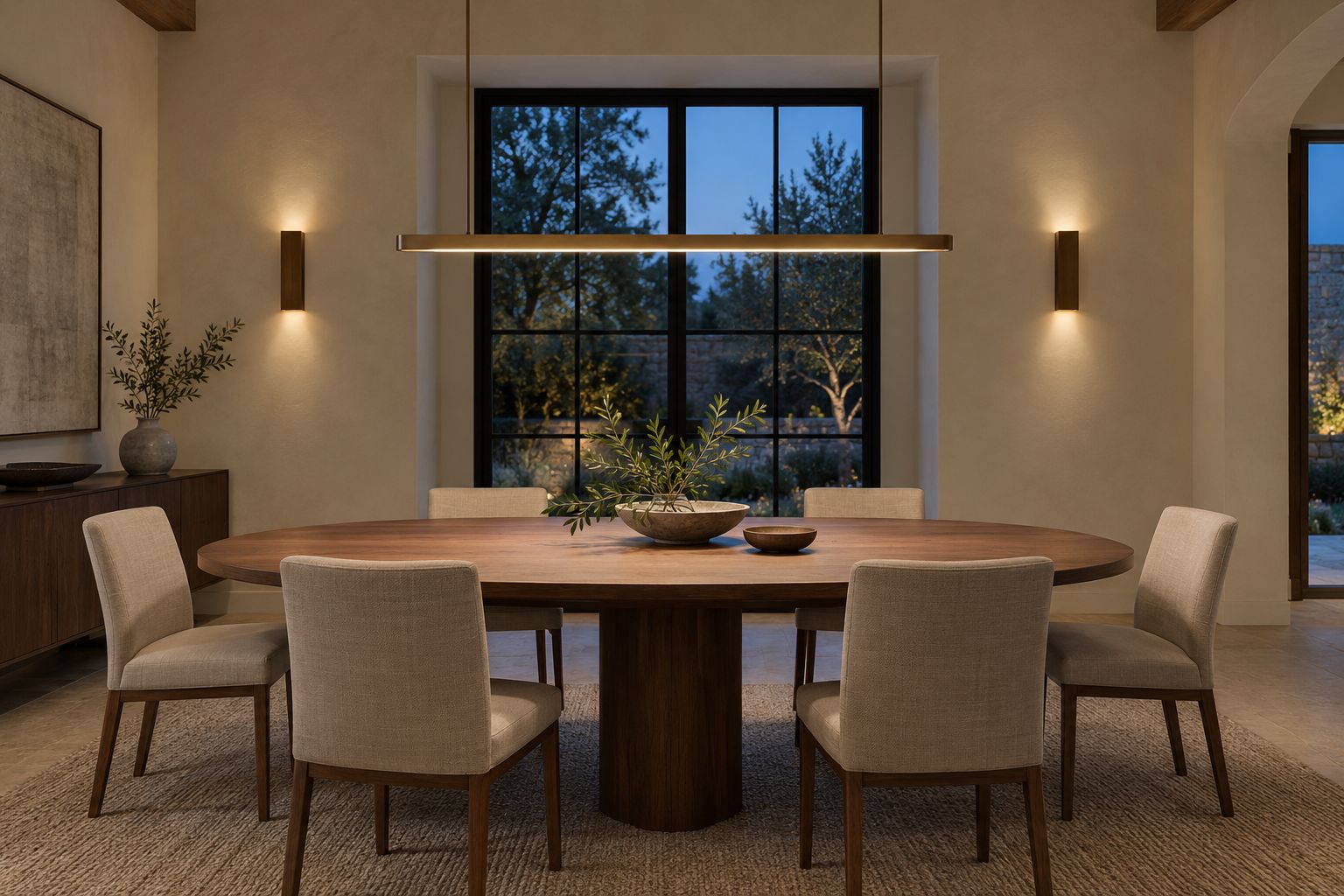
Good lighting begins with how you want to use the room or garden. A clear line above a dining table, light across a preparation surface and a quiet glow along a path have different purposes. Scintillax plans LED lighting design and installation for homes and commercial spaces across Southwest and Southeast Florida, with the proposed fixtures, controls and site conditions considered together.
Begin with the space and the effect
Bring wide photographs, a simple plan and the materials already selected. Show ceiling details, cabinetry, stairs and any exterior areas where you want light. Note fixtures and controls you hope to retain, and describe where light is useful during the day and evening.
Explore linear lighting for a continuous architectural line, cabinet lighting near a worktop, and accent and stair lighting to reveal a particular detail. Garden and pathway lights and pool lights require separate reviews of their intended exposure and equipment.
Pair LED lighting with cabinets or countertops
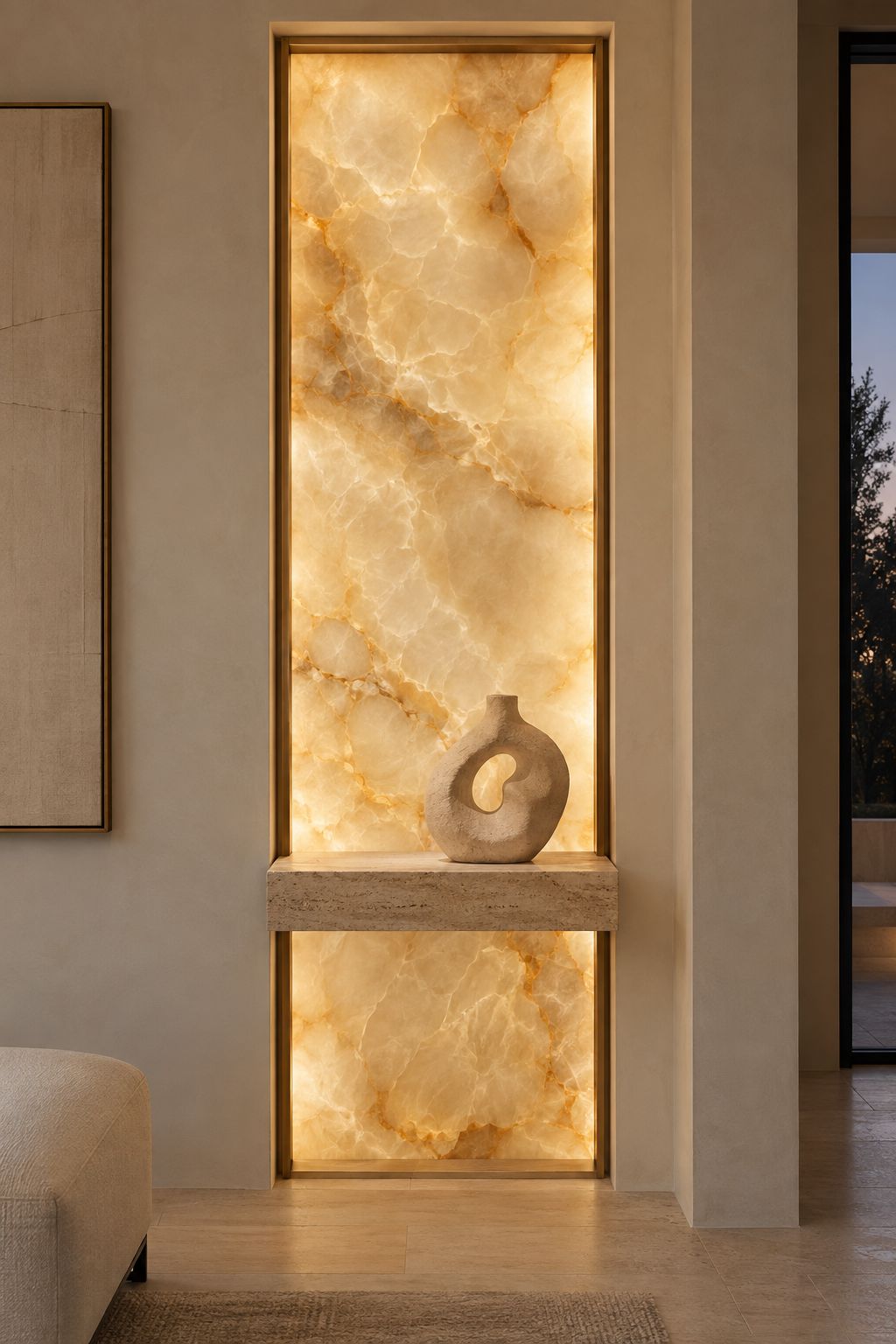
Choose the approach around what you are changing. Light directed onto a countertop can serve food preparation on an ordinary opaque surface. Making the stone itself glow is a separate design that needs a suitable translucent slab.
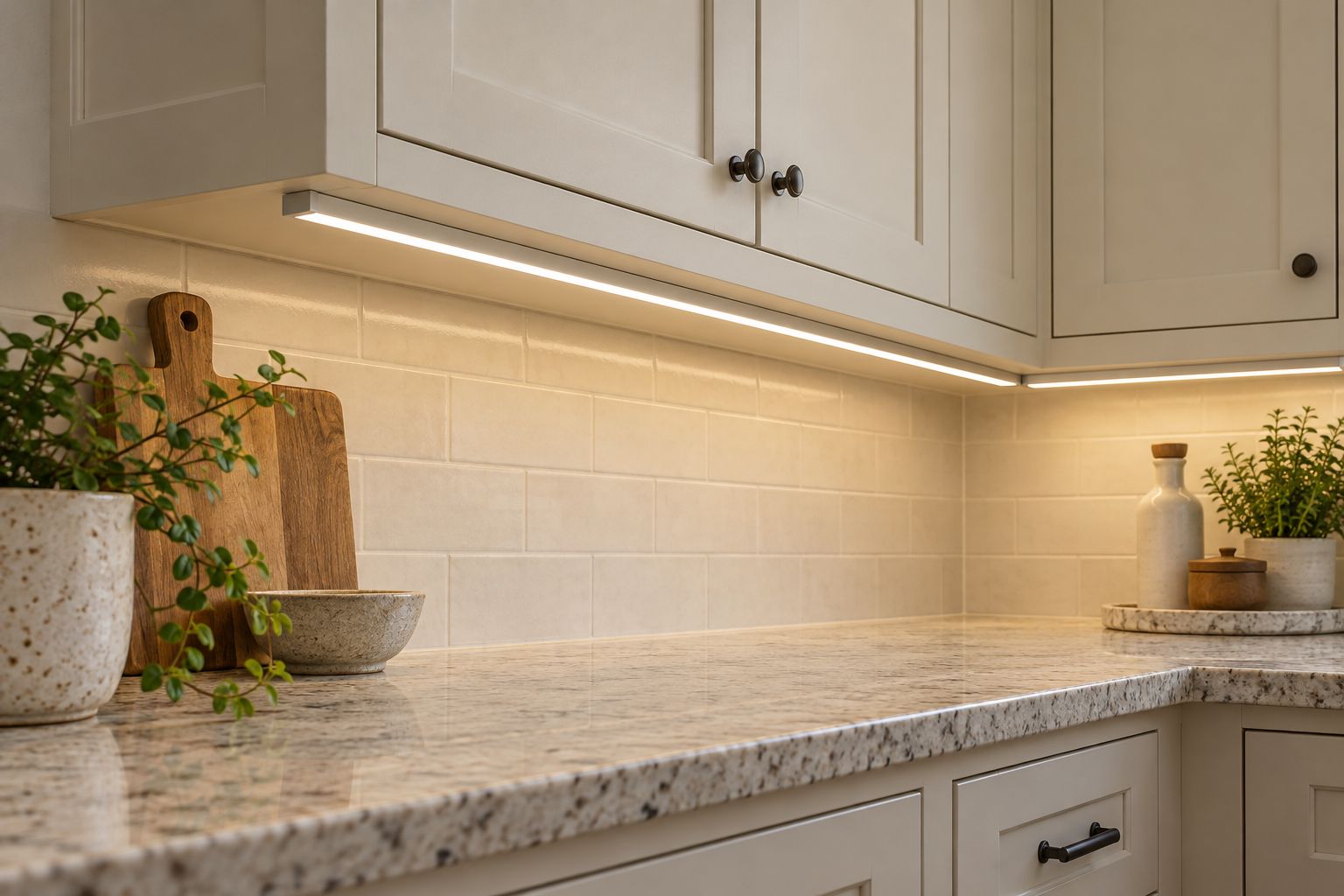
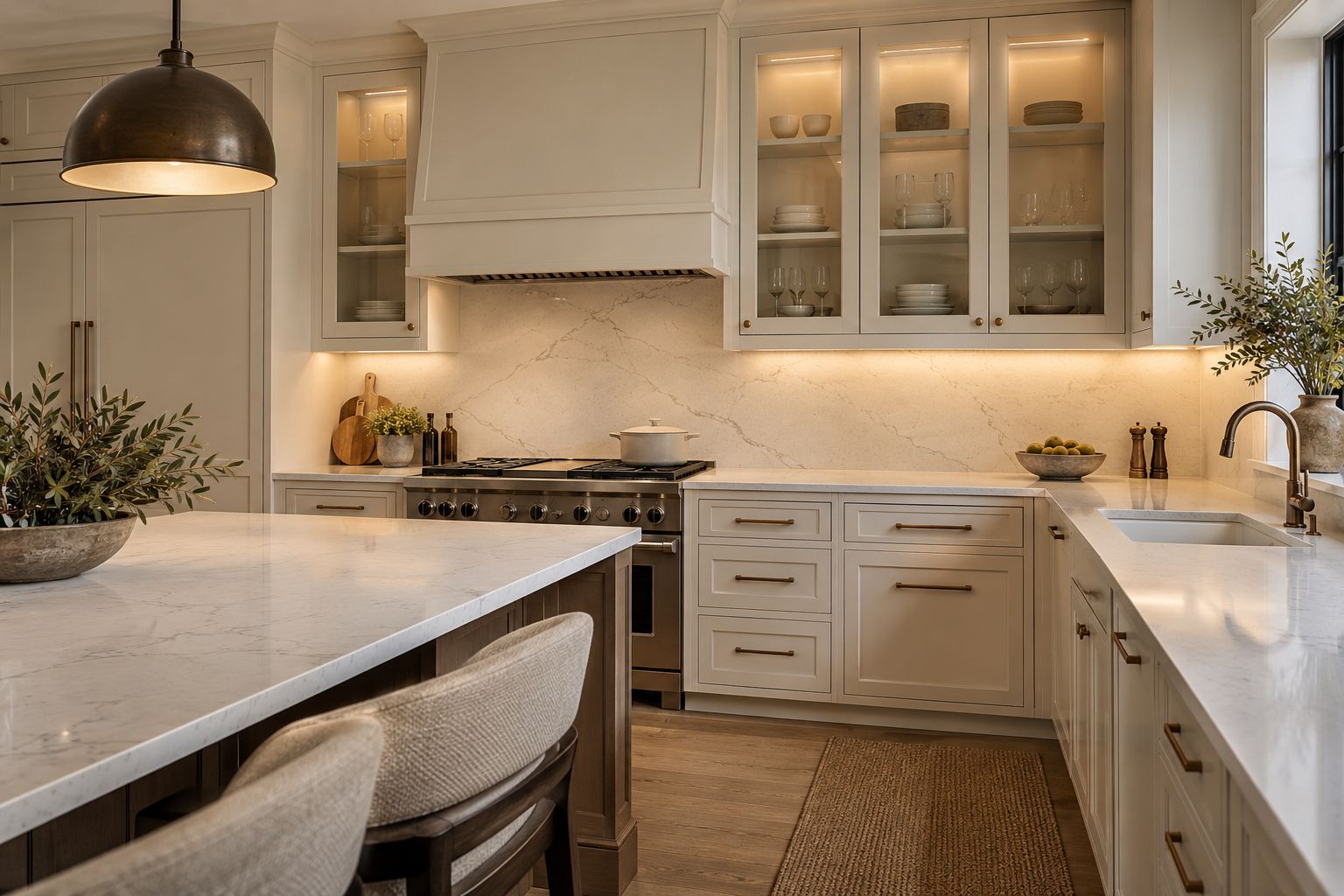
- New custom cabinets: Coordinate the light with the cabinet drawings. Choose the profile and diffuser before precut channels are fabricated, and show cable routes, controls and reachable components. The integrated cabinet LED guide explains the details to settle first.
- Keeping your cabinets: Start with photographs of the cabinet underside, nearby power and the counter finish. Review available mounting space, cable concealment and access before selecting the light. Check the proposed position from standing and seated views, especially above reflective counters. Explore the cabinet lighting service for the scope conversation.
- A translucent stone feature: Test the actual slab with the proposed light before agreeing the effect. Define which faces should glow, then coordinate stone support, diffusion, controls and maintenance access. The backlit stone planning guide covers this assembly; a pale color or stone name alone does not establish suitability.
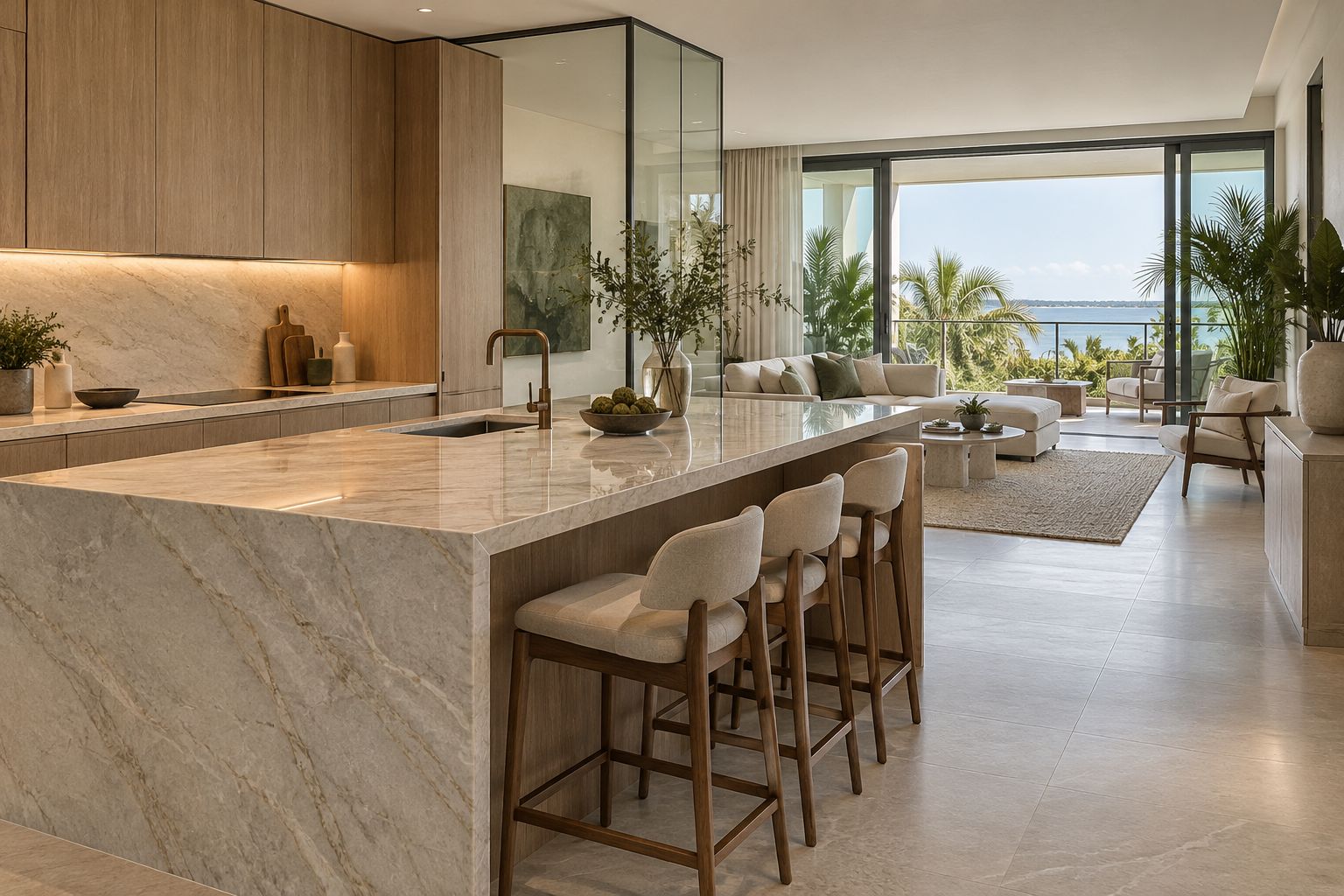
These approaches can share a room. For new custom cabinets and countertops, discuss the lighting before fabrication so the visible finish and the hidden components can be planned together.
Questions about installation and the proposal
How much does LED lighting installation cost?
Price follows the actual scope. Fixture quantities, mounting, channels and diffusers, access, cable routes, controls, finish work and electrical coordination all affect the proposal. Share your project location and preferred timing; photographs establish a starting point before a site-specific review.
What affects the electrical part of the price?
Existing conditions, access, the proposed equipment and the required connections influence the work. Confirm responsibilities and the quoted scope with the relevant trade before starting. A general online allowance cannot establish the cost for your particular room, garden or pool.
Are LED lights difficult to install?
A replacement lamp and a recessed architectural lighting system are different projects. Integrated channels, cabinetry, ceilings and exterior routes need mounting and finish details to be planned early. The appropriate approach depends on the products and construction, including how components will be reached later.
Do I need an electrician, or can I install lights myself?
Follow the product instructions and have work involving electrical circuits or fixed wiring reviewed by an appropriately qualified electrical professional. Scintillax confirms the design, installation scope and required trade responsibilities for each project. Review any necessary approvals before the work is agreed.
What is involved in setting up a new LED lighting scheme?
Agree the lighting positions, desired output and color, mounting details, suitable products, controls and service access. Review the complete layout with the surrounding materials before fabrication or finishes are closed in. The installer then follows the approved product and project requirements.
Controls, glare and the everyday experience
What disadvantages should I watch for?
An exposed bright source can create distracting glare or reflections on polished stone and glass. A poorly considered line of light can also emphasize features you intended to keep quiet. Compare placement, diffusion and output in relation to the room, rather than choosing a fixture by appearance alone.
Why might LEDs flicker when dimmed?
The proposed LED source, driver and dimmer must work together. Flicker or dropout at certain settings can relate to compatibility and the usable dimming range. Review the manufacturers’ information for the actual components; Lutron’s explanation of LED dimming issues illustrates why a dimmable label alone does not settle the combination.
Existing flicker should be assessed rather than treated as a certain sign that one particular component is failing. Share equipment labels and when the symptom occurs during the consultation. Final troubleshooting and electrical work depend on the actual installation.
Care, replacement and useful access
How long does an LED fixture last?
Use the selected manufacturer’s product information, conditions of use and warranty. There is no single lifespan for every installation. Light output can decline over time, and the reliability of the complete fixture matters alongside its LED source. The U.S. Department of Energy’s LED system reliability guidance explains this distinction.
What happens when an LED fixture stops working?
The suitable repair depends on the product and the cause. A replaceable lamp, separate driver and integrated fixture have different service arrangements. Keep equipment references and plan accessible drivers and connections so the appropriate professional can assess the system without avoidable disruption to finished surfaces.
Can LEDs stay on continuously?
Check the specific product’s operating requirements and intended use. Discuss the lighting schedule, controls and energy use instead of assuming continuous operation is suitable for every product or location. Timers and dimming choices should be reviewed as part of the complete system.
Does flickering mean the fixture is about to burn out?
It does not establish a diagnosis by itself. Record when the issue happens and provide the fixture, driver and control references. Have the installation assessed before deciding which component should be replaced.
Bring the plan into a consultation
Include your community, photographs, approximate dimensions and the effect you want. For renovation work, share the cabinet or ceiling schedule so mounting and cable routes can be discussed before finishes are completed. Exterior work benefits from a plan showing paths, steps, planting and seating.
Start with the relevant lighting application or discuss your project with Scintillax. The consultation defines the proposed products, site requirements, installation sequence and responsibilities before a project-specific proposal is confirmed.
Bring your location, room photographs and the details that matter most. We can review the materials, light and practical requirements together.
Plan your lightingMaterial studies
The details that make the room.