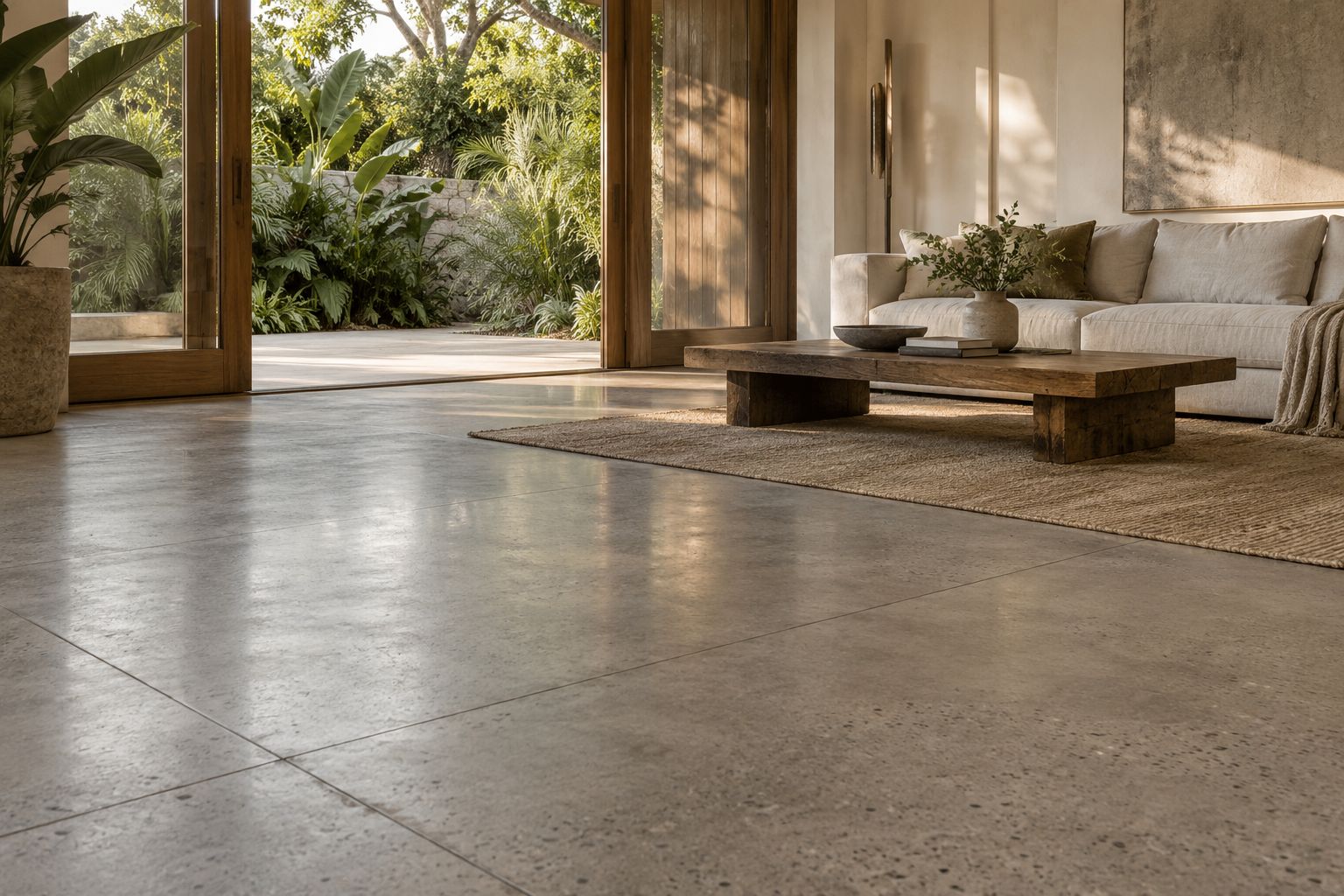
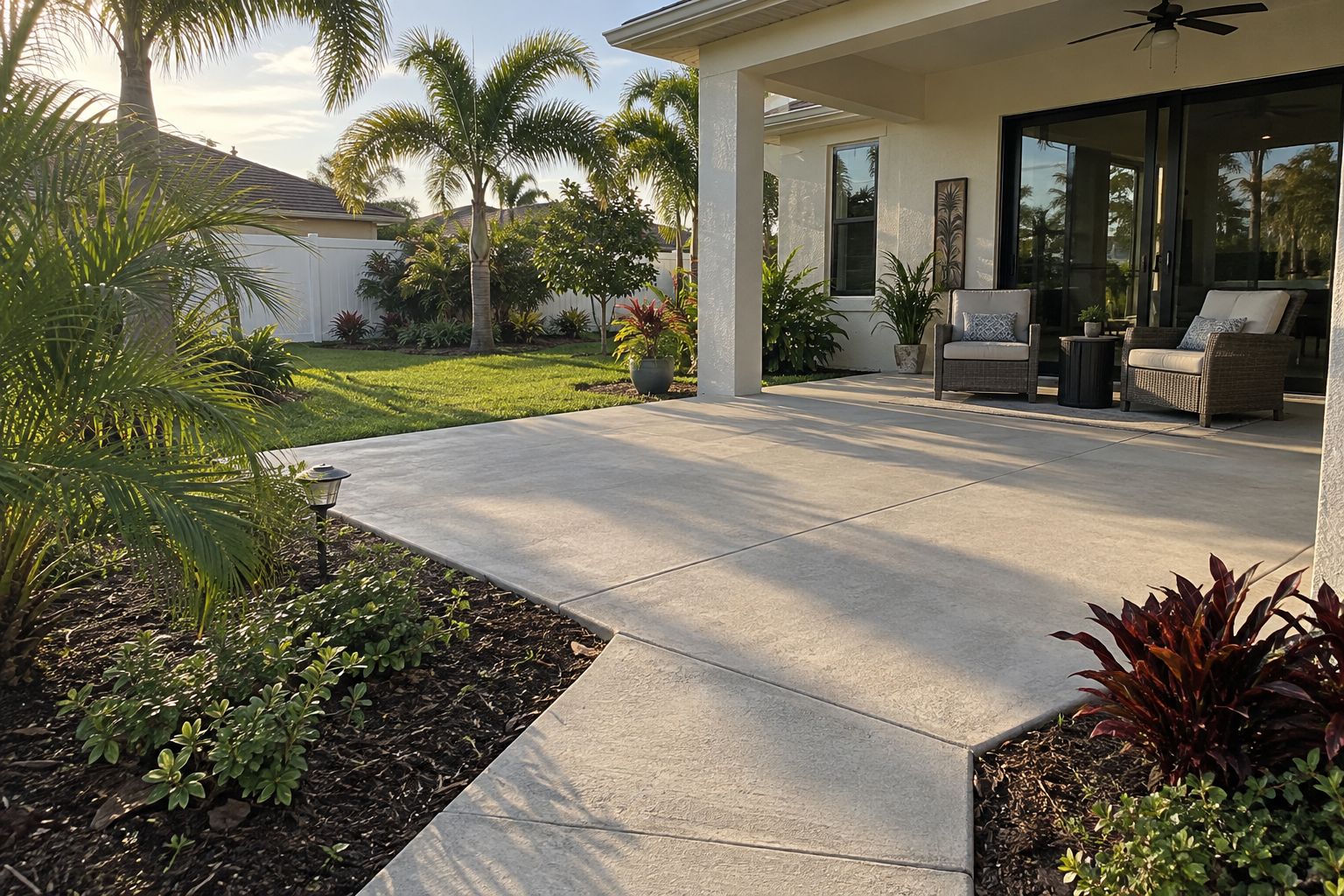
Materials, light & space
Room to live outside.
Natural stone, concrete, and warm architectural finishes for outdoor living.
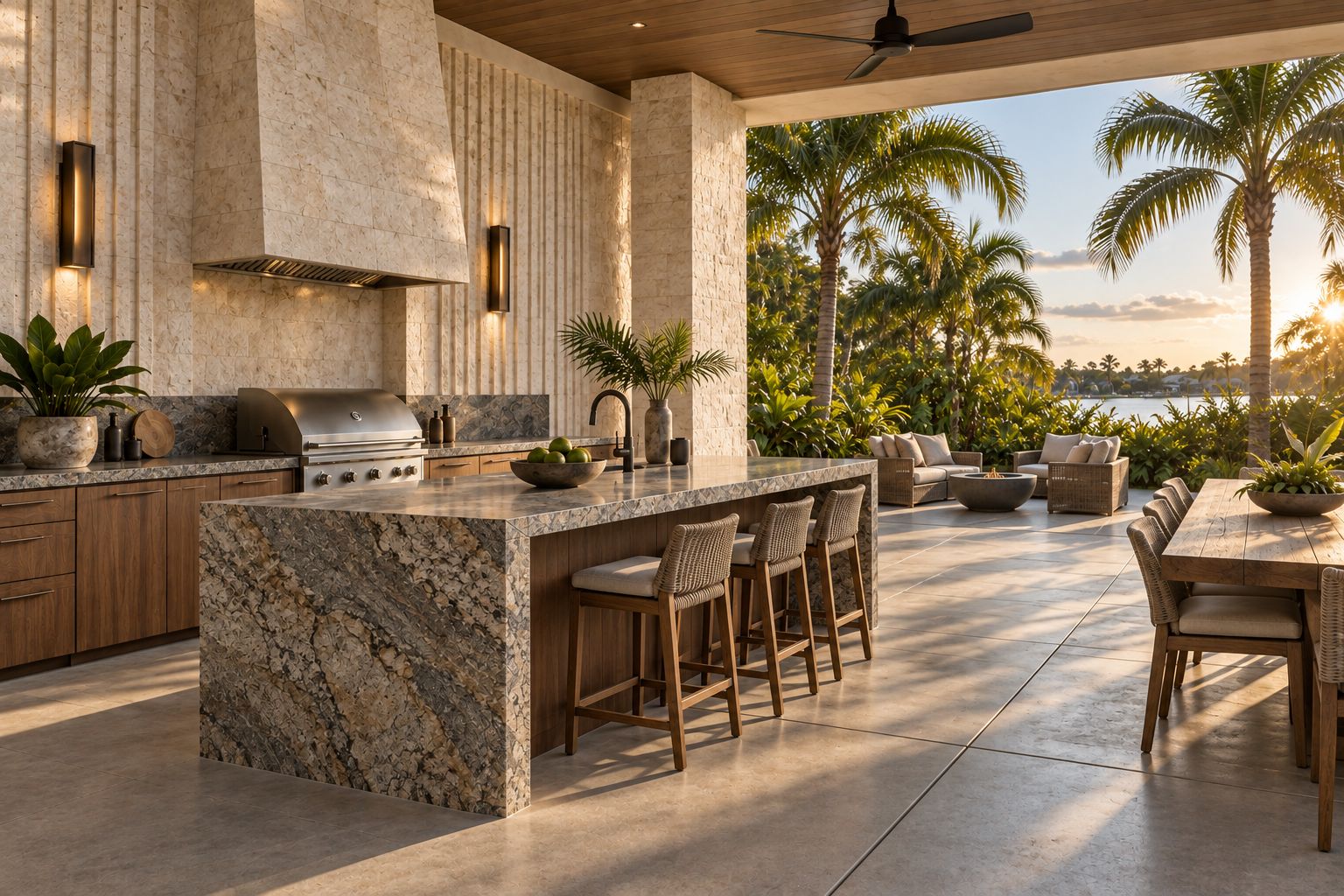
An outdoor space should feel connected to the home. Concrete, natural stone, and soft architectural light bring continuity from indoors to out.
Begin with the setting
Sun, rain, intended use, and drainage come before the final finish. Start with the surfaces and details that fit your space.
Material studies
A closer look.
The detail
Connect the working surface with the garden.
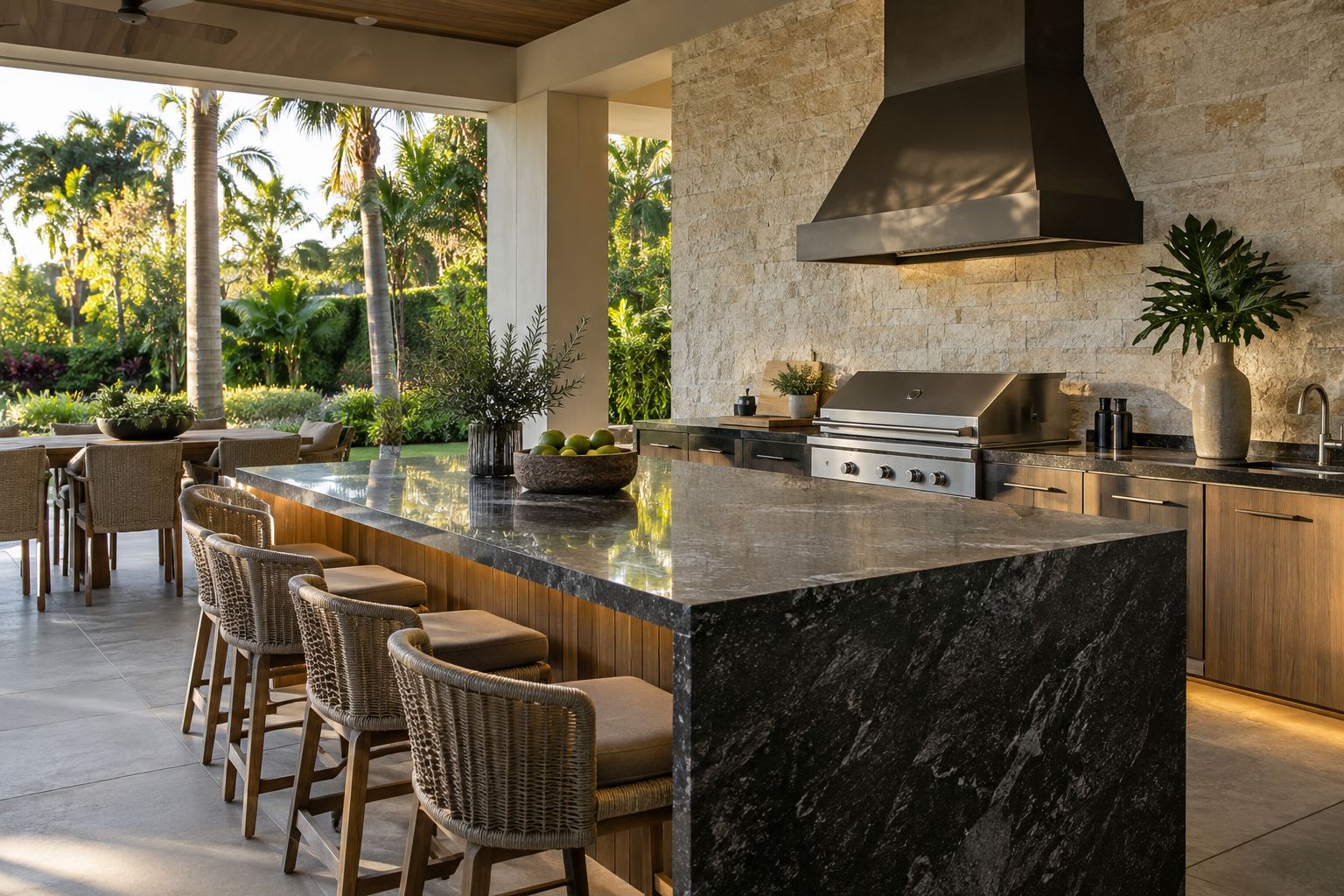
The counter, cabinetry, and paving give this covered kitchen a room-like character while the open edge keeps the garden present. Charcoal granite carries mineral texture across the island, and warm wood brings a familiar interior note into the lanai. A soft line of light helps define the cabinetry as daylight fades. The materials belong to one setting even though each has a different role.
Begin your layout with preparation, serving, seating, and the route back inside. Identify which surfaces are covered and where direct sun or rain can reach them. Discuss appliances, supporting cabinetry, drainage, and the proposed outdoor suitability of the complete assembly. A photograph can suggest the atmosphere, but the specific product and installation need to respond to your site conditions rather than the appearance of a covered room elsewhere.

The material
Let mineral texture anchor the palette.
Granite offers a range of visual starting points, from darker mineral compositions to lighter surfaces with a more varied pattern. Here, a darker counter gives the warm cabinets and pale wall a clear anchor. Compare the slab with the paving and the finish of the appliances, then look at the group from inside the house. That wider view helps the outdoor room feel like part of the home.
Bring samples or references for every adjoining surface, including the concrete finish and any masonry. Review joints, edges, transitions, and care with the particular products being considered. Include photographs of the existing ground and drainage, plus community work requirements where applicable. A useful outdoor brief starts with how you would like to spend an evening outside and gives the project team enough information to connect that atmosphere with the actual setting.