Material notes / Scintillax journal
Quartz or quartzite? Start with how you live.
Compare quartz and quartzite countertops for your Southwest and Southeast Florida home: slab appearance, care, outdoor suitability, backlighting and installation planning.
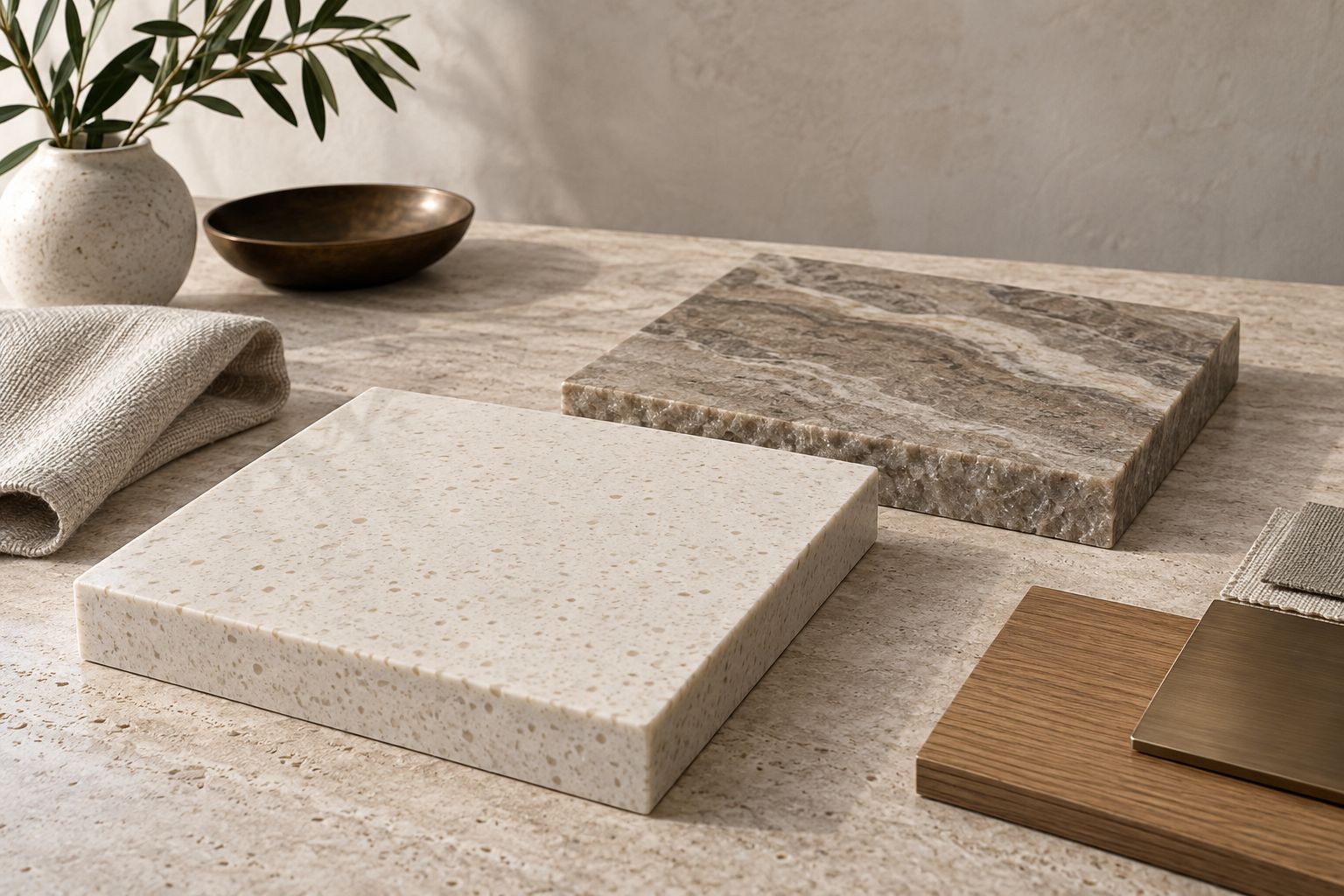
Despite the similar names, engineered quartz and natural quartzite are different materials. Quartz is a manufactured surface; quartzite is a natural stone with variation from slab to slab. When planning custom countertop design and installation, compare the actual selections and the way you use the room.
Compare the whole slab and the room
Begin with the appearance you want. Compare current samples and full slabs under the light in your space. Natural quartzite can vary between slabs carrying the same name. A manufactured quartz design should also be reviewed in the scale and finish you intend to use.
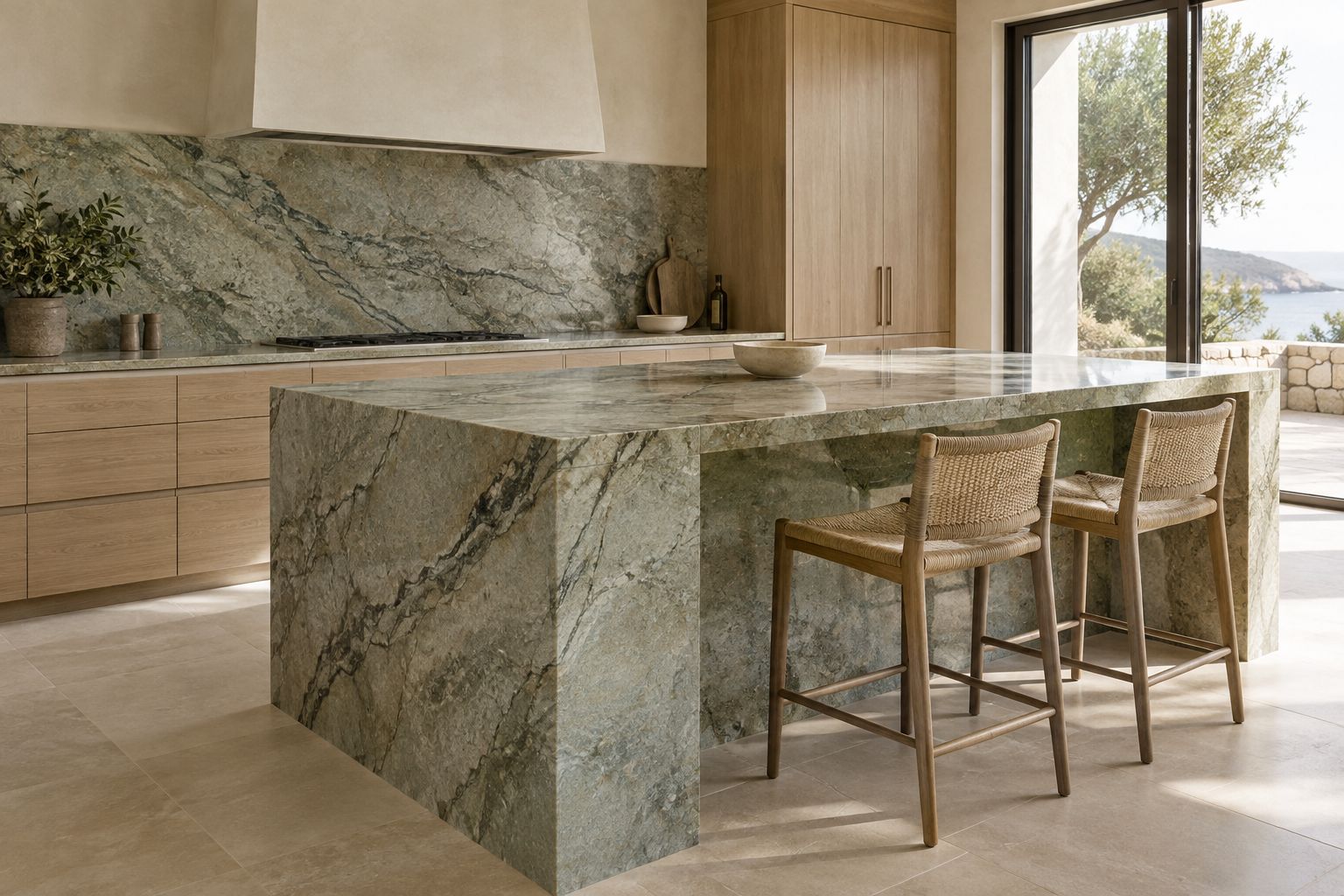
For a waterfall island, mark the countertop and vertical faces on a drawing. Discuss how the pattern will meet at an edge, where seams may fall and whether the slab dimensions support the layout. Small samples are useful for a shortlist; they do not resolve the entire cut plan.
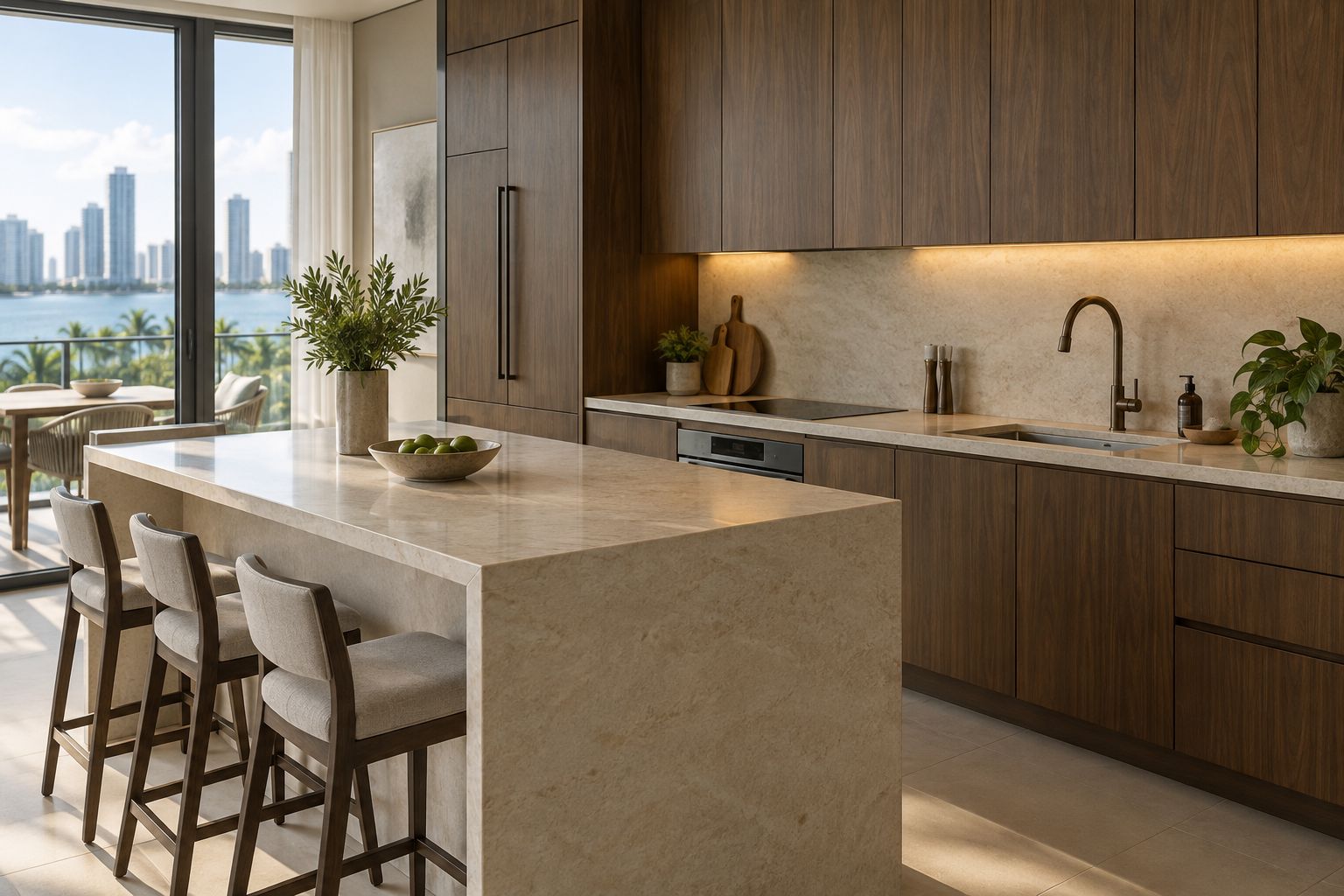
Cabinet color, flooring, daylight and under-cabinet LED lighting all affect how a surface reads. Bring photographs of the finishes you intend to keep.
Match care expectations to the exact selection
Ask for the manufacturer’s or stone supplier’s care guidance for your chosen surface, including cleaning, heat protection and any sealing requirements. Do not treat either material as immune to damage.
As a product-specific example, Cambria’s care guidance says its quartz does not need sealing and requires protection from heat. That guidance applies to its product; confirm the instructions for the surface you select. For natural quartzite, discuss the particular slab, finish, any treatment and the recommended care plan with the supplier or fabricator.
Review outdoor use separately
For a Southwest and Southeast Florida outdoor kitchen, confirm the exact material’s suitability for sunlight, moisture and the intended exposure. An indoor approval should not be treated as an outdoor specification. Covered lanais can still receive sun and weather.
Discuss appliance clearances, drainage, substrate and installation details along with the surface. The material’s appearance and the installation system both need to suit the site. Our outdoor-kitchen material guide provides a starting brief for that conversation.
Test a backlit selection before committing
Neither name alone establishes suitability for backlighting. If you want an illuminated island or bar front, review the actual slab or product with the proposed LED assembly. Selected translucent stone can be explored, while an opaque surface may instead suit lighting below or around the counter.
Keep backlit stone planning separate from an assumption that every quartz or quartzite surface will glow. The lighting, support, edges, controls and maintenance access should be reviewed together.
Compare the complete installation scope
A useful proposal identifies the selected material and thickness, measurements, slab layout, seams, edge profile, cutouts, support, removal or preparation work, delivery and installation responsibilities. For a replacement countertop, include photographs of the cabinets and existing sink or appliances.
For Naples condominium work or a property with community rules, note elevator bookings, delivery access and work-hour restrictions. These are project details to confirm, rather than assumptions built into a generic square-foot price.
Make a useful shortlist
Explore the examples in our engineered quartz and quartzite libraries. Save the options you like, then share the room, approximate dimensions and your priorities: appearance, care, use, lighting and timing.
Scintillax serves Fort Myers and surrounding Southwest and Southeast Florida communities. Request a countertop consultation to discuss the selected surfaces and the installation scope for your home.
Bring your location, room photographs and the details that matter most. We can review the materials, light and practical requirements together.
Plan your project