Choosing engineered quartz
Scintillax designs and installs engineered quartz countertops for kitchens, islands and vanity tops across Southwest and Southeast Florida. The selected manufacturer’s product establishes its pattern, finish and care requirements. Start with current samples and the layout of the actual room.
Choose the pattern for the whole countertop.
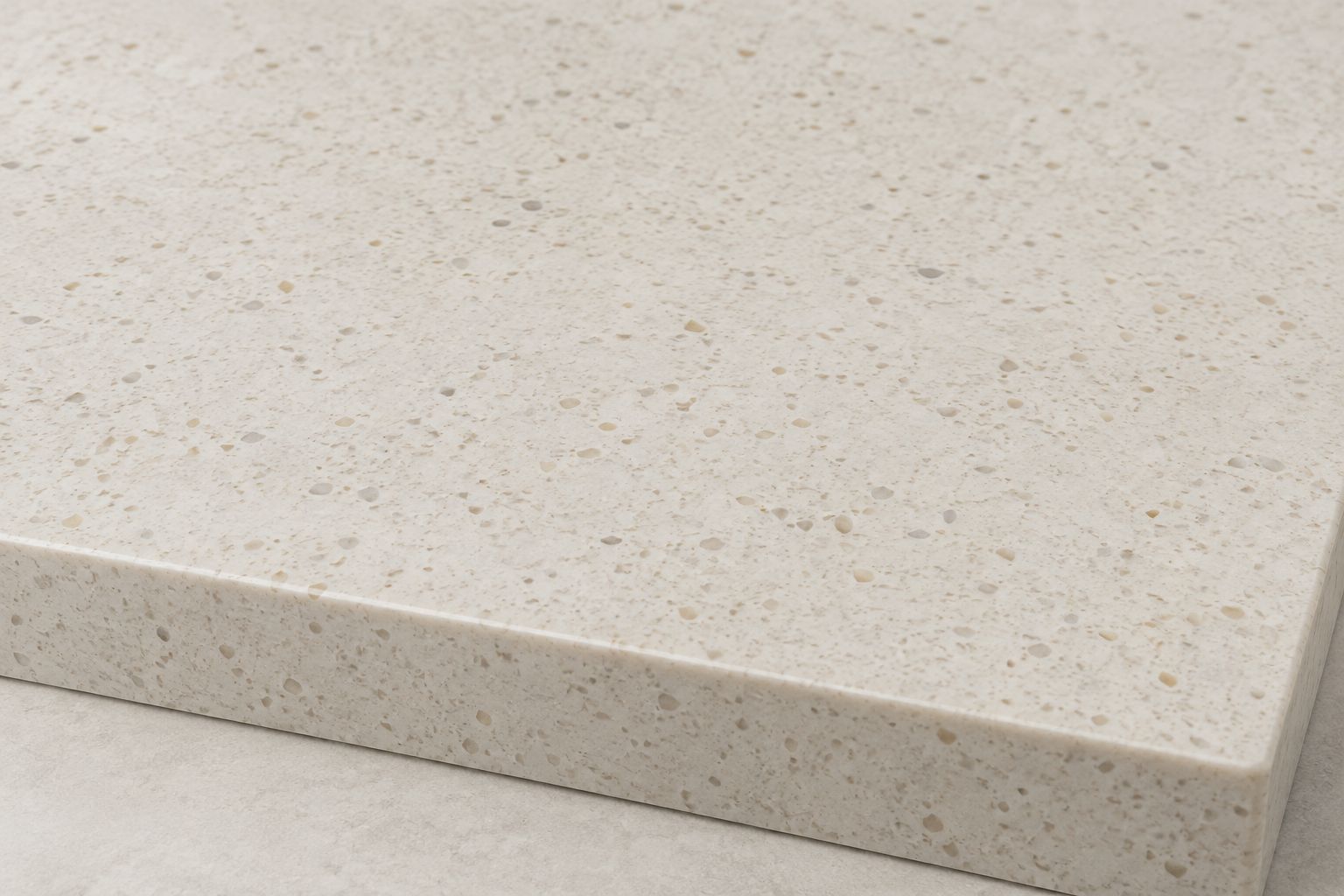
An understated product can give cabinetry and lighting a quieter background; a stronger veined design may lead the island or backsplash. Review a full slab or current manufacturer’s layout reference when the pattern is important. Look at the proposed seams, corners and cutouts together. Two products with a similar color name can have different patterns, finishes and installation requirements.
Let the room guide the finish.
Compare the sample horizontally and vertically beside cabinet fronts, flooring and hardware. View it in daylight and under the proposed under-cabinet lighting. Discuss visible reflections and the relationship to a full-height backsplash. Confirm the available finish for the actual product before approving an edge or waterfall-end detail.
Plan kitchen and bathroom applications separately.
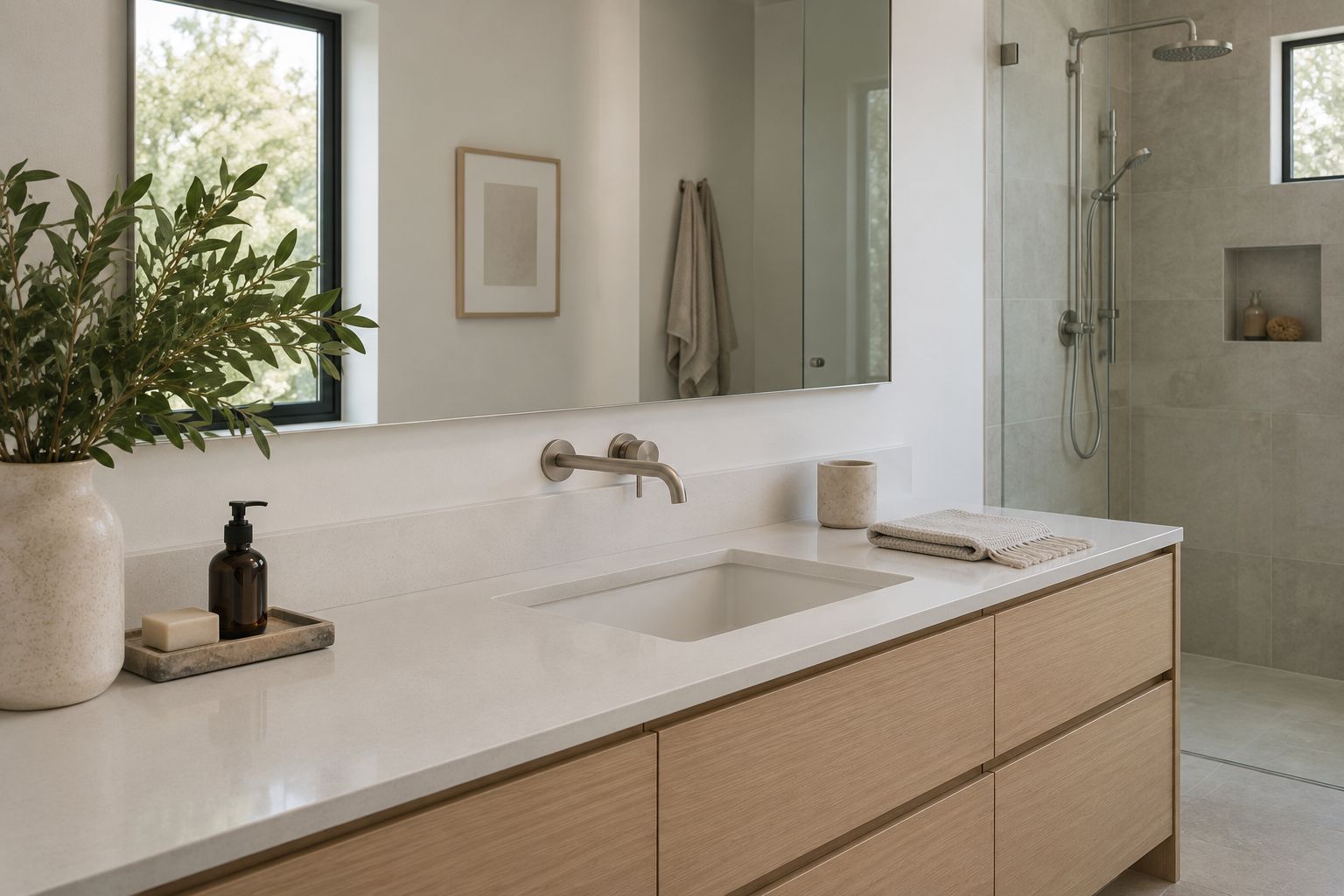
For a kitchen, share the sink, appliance dimensions and cabinet plan with the countertop installation team. For a bathroom vanity, coordinate basin openings, fixtures, mirror dimensions and nearby glass. A product shortlist is most useful when it also identifies the surfaces and fittings the new counter will meet.
Review the product’s care instructions.
Use the selected manufacturer’s instructions for cleaning and heat protection. For example, Cambria’s product-care guidance advises protection from direct heat and restricts harsh cleaning products. This is a product-specific reference; it does not establish identical care, outdoor suitability or backlighting performance for every engineered quartz surface.
Heat protection includes small appliances as well as pans. An air fryer or slow cooker can heat the same area for an extended period; follow the surface manufacturer’s instructions for a suitable insulating trivet. Resistance to everyday use does not mean a surface is scratch-proof or chip-proof, especially around exposed edges and sink openings. A cutting board protects both the counter and the knife.
Check outdoor and lighting claims by product.
Choose engineered quartz for its manufactured palette and repeatable design direction, then check the exact product’s permitted uses. A covered lanai can still receive sun and wind-driven rain. Require the manufacturer’s express approval for that exposure instead of assuming an interior countertop belongs outdoors. Standard quartz is also not automatically translucent: a backlit design needs a product specifically suited to the purpose and a physical test of the complete assembly. Natural quartzite is a separate material family with a different selection process.
Define the installation before ordering.
Final measurements, seam positions, edge profiles and approved sink or appliance cutouts form part of the cut plan. Review supporting cabinets, overhangs, delivery access and the order of work with adjoining trades. The proposal identifies fabrication and installation responsibilities, removal if included and any separate plumbing or electrical coordination. Availability and scheduling are confirmed for the actual product and scope.
See the illustrated Bonita Springs glass-and-vanity study for a proposed bathroom palette. Compare engineered quartz with natural quartzite, then discuss quartz countertops with your photographs, approximate dimensions and project location.